
Did My Sweep Do the Work?
Post-service checklist to verify the work was actually performed.
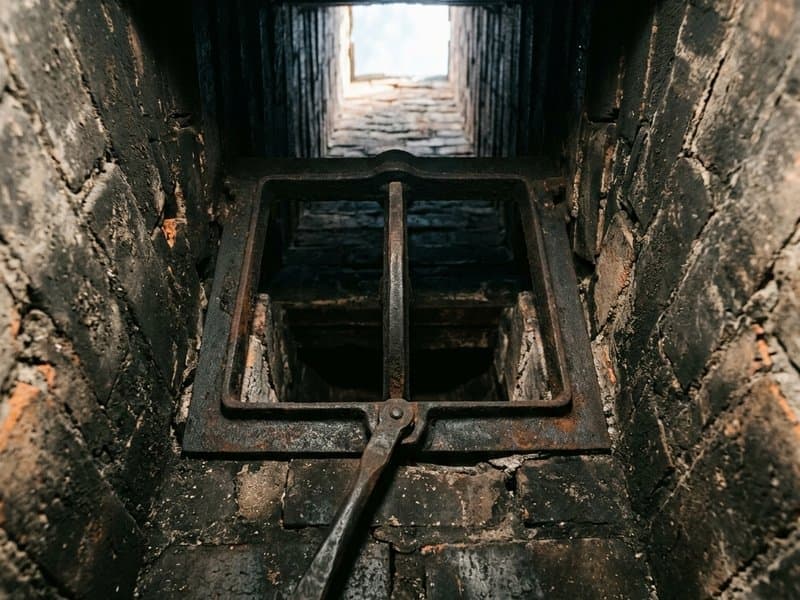
Your chimney damper is the hidden valve that decides whether your fireplace is an asset or a hole in your house. When it seals properly, the fireplace is an occasional heat source. When it does not — and most original-equipment throat dampers stop sealing properly within 20-30 years — your fireplace becomes an always-open chimney that pulls conditioned air out of your living space every minute of every heating season. The cost of a failing damper shows up in your energy bill, not in a repair quote, which is why most homeowners ignore the problem until an operator brings it up.
This guide is the consumer reference for chimney dampers. It covers what a damper does, the two damper types (throat and top-sealing), the real cost ranges for repair and replacement, the "your damper is broken" upsell that turns a $100 adjustment into a $500 repair, and how to check your own damper before you hire anyone. If your fireplace feels drafty when unused or smokes when you use it, this is the first diagnostic to run.
A chimney damper is a valve that opens and closes the flue between the firebox and the chimney above. When open, smoke and combustion gases exit through the chimney. When closed, the flue is sealed — preventing heat loss from the house in winter, cold-air infiltration in summer, and animal or debris entry year-round.
Every properly-equipped fireplace has a damper. Wood-burning fireplaces require a damper for operation; most modern gas fireplaces have dampers or damper equivalents as well. On a closed damper, the seal should be tight enough that you cannot feel a draft from the firebox on a windy day. On an open damper, the opening should be large enough that combustion gases exit freely without smoke spilling into the room.
A throat damper that no longer seals properly — warped from age, rusted, or bent from debris — lets conditioned air escape through the flue continuously. On a 2,000 square foot home with a single fireplace and a failed throat damper, the annual energy cost ranges from $100 to $400 depending on climate, primary fuel cost, and home air-tightness. Over 10 years of ignored damper failure, that is $1,000-$4,000 in lost energy. A $300-$600 top-sealing damper install pays back in 3-6 years and delivers 15+ years of air-sealed performance after that.
Nearly all residential chimney dampers fall into one of two designs. Knowing which you have determines what repair and replacement options are available.
A throat damper is a cast-iron plate or blade mounted inside the chimney at the top of the firebox, just above where the flue narrows from firebox width to flue width. A handle, chain, or lever in the firebox operates the damper — rotating the plate open for burning, closed for idle.
Throat dampers are original equipment in the vast majority of masonry fireplaces built since roughly 1920. They work reliably when new but degrade predictably. The cast iron warps under thermal cycling. The seal face rusts. Debris (mortar chips, bird nesting, creosote chunks) accumulates around the blade, preventing full closure.
Pros:
Cons:
A top-sealing damper is mounted at the very top of the chimney instead of at the firebox throat. It combines the damper function with the chimney cap function in one unit. A silicone or rubber gasket creates a positive seal when closed — much tighter than any throat damper. A cable or chain runs down the flue to a handle at the firebox for operation.
Top-sealing dampers have become the preferred replacement option for most homeowners whose throat dampers are failing. They solve the energy-loss problem comprehensively, replace the cap function in the same install, and cost only modestly more than replacing a throat damper.
Pros:
Cons:
| Feature | Throat Damper | Top-Sealing Damper |
|---|---|---|
| Seal quality | 70-85% at best, worse with age | 100% with intact gasket |
| Energy efficiency | Significant heat loss | Near-airtight when closed |
| Installation cost | N/A (already present) or $200-$500 for replacement | $300-$600 including install |
| Repair cost | $100-$300 for adjustment, cleaning | Not typically repaired; gasket replaced ($100-$200) |
| Replacement cost | $200-$500 | $300-$600 |
| Also functions as cap | No — separate cap required | Yes — replaces cap too |
| Operation | Handle or lever in firebox | Cable or chain in firebox |
| Lifespan | 20-30 years (original), shorter if warped | 10-15 years before gasket renewal |
| Can DIY | Adjustment possible; replacement difficult | No — requires rooftop install |
The decision framework is simple. If your existing throat damper works well and seals reasonably — handle operates smoothly, blade closes flush against its seat, no visible rust or warping — keep it. Continue annual inspection and maintenance.
If your throat damper is failing and replacement is on the table, the right choice is almost always a top-sealing damper. The cost differential ($100-$200 extra) is paid back by energy savings within 2-4 years, and the top-sealing unit provides better sealing for the remainder of its 10-15 year service life.
If you are installing a new cap anyway, the top-sealing damper is even more attractive because it replaces the cap in the same install — you pay for one trip and one piece of hardware instead of two.
Six observable signs of damper problems. Match the symptom to the likely issue before meeting with any operator.
The handle operates, but the blade does not travel to full open or full closed position. Usually caused by debris in the hinge, a bent blade, or rust on the pivot. Adjustment and cleaning ($100-$200) often resolves this — replacement is sometimes but not always necessary.
Rust visible on the blade face, warping where the blade no longer sits flat against its seat, or visible bending. These are typically end-of-life signals for a throat damper. Replacement is the right call.
A noticeably colder spot near the fireplace on cold days, a continuous draft felt when standing near the firebox, or a temperature differential between the room with the fireplace and other rooms in the house. The damper is not sealing, and the fireplace is pulling conditioned air out of the house 24/7.
The damper is not opening far enough, or the blade is stuck partially closed. Smoke cannot exit through the restricted opening and spills into the room. Stop using the fireplace until this is resolved — continued use with a partially-closed damper is a carbon monoxide hazard.
Stand at the firebox with the damper closed, look up with a flashlight. If you can see daylight past the damper, the seal is compromised. Some light leakage is normal on well-worn throat dampers; more than a hairline crack is beyond repair and indicates replacement is warranted.
Scraping, grinding, or catching when operating the handle. Often debris in the mechanism — cleaning usually resolves. Can also indicate a cracked pivot or bent blade, which is replacement territory.
Damper work is straightforward and should be priced straightforwardly. Operators who quote dramatically outside these ranges warrant questioning.
| Service | Typical Cost Range | Scope |
|---|---|---|
| Throat damper adjustment and cleaning | $100-$200 | Debris removal, pivot lubrication, handle adjustment |
| Throat damper replacement | $200-$500 | Remove existing, install new cast-iron throat damper |
| Top-sealing damper installation | $300-$600 | Mount on chimney top, route cable to firebox, includes cap function |
| Top-sealing damper gasket replacement | $100-$200 | Replace silicone or rubber seal on existing top-sealing unit |
| Damper parts repair (blade, hinge, handle) | $150-$350 | Targeted part replacement without full damper swap |
Multi-fireplace homes with dampers on multiple flues are priced per damper — one damper replacement doesn't discount the second one meaningfully, because each install is a separate job.
The most common damper-related upsell is straightforward: an operator claims the damper is "broken" and quotes $500 for replacement when the actual issue is accumulated debris or a minor adjustment issue that a $100 cleaning would resolve.
During a sweep or inspection visit, the operator tests the damper. The handle is sticky or the blade does not travel fully. The operator declares the damper "broken" and quotes a $400-$500 replacement. The homeowner — knowing the damper was not working well — accepts.
What the operator does not tell the homeowner: most "sticky" or "stuck" damper handles are caused by debris in the pivot hinge, creosote accumulation on the blade edge, or rust on the handle mechanism. All of these are resolved with 15-30 minutes of cleaning and lubrication. The resulting repair cost should be $100-$150, not $400-$500.
Ask the operator to show you the specific failure. "Can you demonstrate what's not working and explain whether cleaning and adjustment would resolve it before replacement?" A legitimate operator runs through the adjustment options before quoting replacement. A scam operator pivots to "it's beyond repair" without demonstrating why.
Get a second opinion if replacement is quoted for a damper that still mechanically operates. Replacement is warranted when the damper is structurally damaged (warped, cracked, bent) or when age-and-cumulative-wear makes adjustment impractical — not for simple operational issues that cleaning would resolve.
See seven-chimney-sweep-scam-patterns for the broader scam framework including damper-related upsells.
A five-minute self-check at the firebox identifies whether your damper is the source of any fireplace-related problems.
Fully open. Clear any ash or debris from the firebox floor.
Usually a vertical rod with a handle inside the firebox just below where the flue narrows. Sometimes a chain on top-sealing dampers.
Pull or push the handle through its full range. Note whether it moves smoothly, whether it catches, whether it reaches what feels like a full-open and full-closed position, and whether you can hear the blade moving above.
With the damper closed, shine a flashlight up the flue and look for daylight past the blade. Some light leakage around the edges is normal on older throat dampers; significant light indicates poor sealing.
With the damper open, look for debris on the blade or in the seat that would prevent closure. Flashlight the blade condition — rust, warping, obvious damage are all visible.
Close the damper. Hold a lit incense stick or small piece of tissue at the firebox opening and watch the smoke direction. If smoke draws up into the chimney with the damper closed, the damper is not sealing. If smoke stays level or drifts down into the room, the seal is reasonably tight.
Document what you observe. Take photos of any visible damage. A 5-minute self-inspection before meeting with an operator gives you independent evidence to compare against the operator's findings.
Browse 29+ guides, or jump straight to verified operators in your state.
The 7 chimney sweep scam patterns documented across 27 consumer sources — bait-and-switch, fake Level 2, multi-alias SEO, unnecessary relining. How to spot each one.

Just bought a house with a fireplace? The complete first-time owner guide — inspections, maintenance, costs, and how to avoid scams in year one.
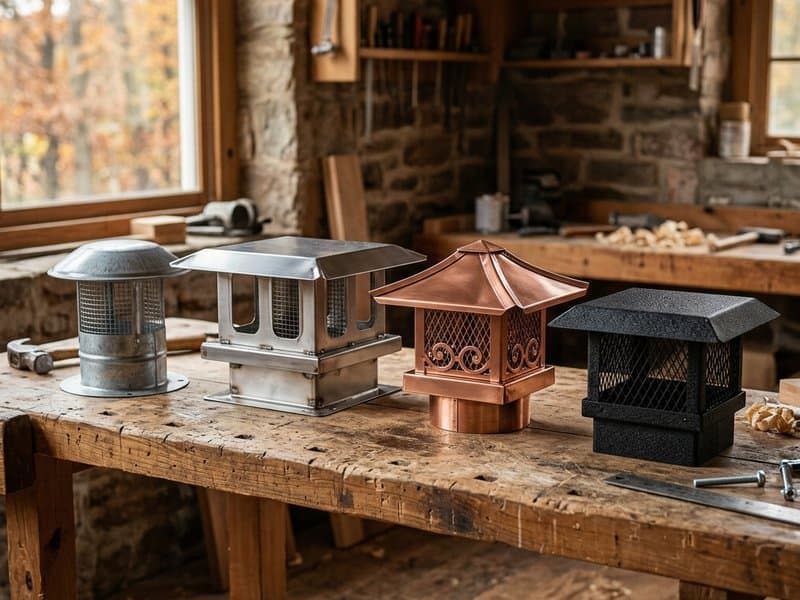
Chimney cap types, costs from $50-$800, replacement timing, and the $600 cap install upsell to avoid. Everything homeowners need before hiring a cap installer.