
Did My Sweep Do the Work?
Post-service checklist to verify the work was actually performed.
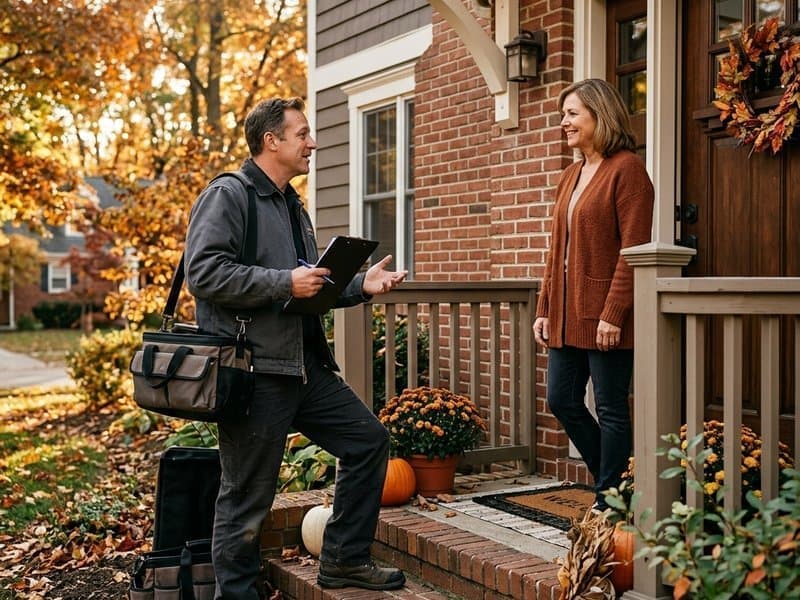
Finding an honest chimney sweep is harder than it should be. The industry is fragmented — 6,000 to 8,000 active operators nationally, almost entirely single-truck and small crews, with no dominant national brand and no mandatory licensing in 49 of 50 states. Google returns a mix of legitimate local operators, lead-generation platforms, and multi-alias shell companies. Reviews are gamed. Directories are thin. Scam patterns are common enough that Reddit has entire threads dedicated to specific metros.
This guide is the actionable counterpart to our scam-pattern pillar article. If seven-chimney-sweep-scam-patterns explains how dishonest operators separate homeowners from their money, this article explains how to find and verify the ones who won't. It's organised around the ten trust signals that appear most consistently in the Voice of Customer research — ranked by how often real homeowners cite them in actual reviews and forum threads — along with the vetting steps that turn each signal into a verified fact.
Ten signals appeared across the 27-source VoC research base ranked by the frequency with which homeowners mentioned them. The ranking matters — signal #1 is mentioned in nine or more distinct forum threads, signal #10 in two. Higher-ranked signals are stronger indicators because they show up organically in real consumer conversation, not as marketing claims.
This is the single most-cited trust signal in the entire VoC base (nine-plus distinct threads). A neighbour, friend, or long-term local resident who has used a sweep multiple times and vouches for them is more predictive of quality than any certification, rating, or website. The reason: the referral source has already stress-tested the operator against local conditions and has a reputation with you to protect.
If you're new to an area, you don't have this yet. The workaround is to ask in the right places. Nextdoor, neighbourhood Facebook groups, and local subreddits (r/Denver, r/bostonhomeowners, r/Philadelphia) often have past threads asking the same question. Search before posting — someone asked this a year ago and got 30 responses. Local Buy Nothing and community listservs also work. What you're looking for is the same operator name coming up from three or more unrelated neighbours.
What this signal does NOT replace: certification checks and insurance verification. Even a neighbour-recommended sweep should still be CSIA-certified and insured. Personal referral is necessary but not sufficient, just like certification.
The Chimney Safety Institute of America runs the US industry certification program. A CSIA-certified sweep has passed an exam on chimney systems, maintains continuing education, and has signed the CSIA code of ethics. Certification is voluntary — only North Carolina mandates it by state law — but a meaningful minority of US sweeps hold it.
Eight-plus VoC threads mention CSIA certification as a trust signal. The phrase that appears in multiple threads is "necessary but not sufficient." CSIA certification means the operator has baseline knowledge of inspection levels, NFPA 211 standards, and industry practice. It does not guarantee they won't still upsell beyond the needed scope, skip rooftop access, or push unnecessary repairs. But an uncertified operator has no such baseline.
Verification is specific: the CSIA search portal (search.csia.org) lets you verify certification by name or ZIP. The portal is a JavaScript single-page app with minimal UX — you'll need to enter a ZIP and browse results — but it is authoritative. On FindChimneySweepers we auto-match operators against the official CSIA dataset and display a CSIA badge where the match is verified, which means no operator can self-claim certification without being in the real database.
See csia-certification for a deeper breakdown of what CSIA does and doesn't tell you.
This is the highest-quality signal in the entire hierarchy, even though it's ranked third by frequency. Multiple VoC threads describe the same pattern: a homeowner calls a sweep for an annual service, the sweep inspects the flue, and reports that "you don't actually need a cleaning yet — we'll look again next year." The consumer reaction is near-universal loyalty. One 2023 thread described it as "that sweep just got himself a customer for life."
An operator willing to turn down a $275 billable sweep because the 1/8-inch threshold hasn't been reached is demonstrating that their business is built on repeat customers, not extractive upsells. That model only works when customers come back, which only happens when they trust the operator. Short-term revenue-maximisers don't do this; long-term relationship-builders do.
You can't verify this signal before hiring — it's something you discover on the first visit. But it's worth specifically listening for. A sweep who says "chimney's clean, save your money" is signalling exactly the right thing about how they run their business. Pay for the inspection regardless (that's fair work that was performed), and call the same operator next year.
Five-plus VoC threads note branded vehicles as a trust signal — specifically, the absence of branded vehicles is cited as a red flag. A legitimate sweep has invested in a company truck with their name, phone number, website, and often CSIA logo visible. An operator arriving in an unmarked personal vehicle with a few tools in the trunk is either a sideline hustler, a subcontractor for a larger lead-gen platform, or — in documented cases — a multi-alias scam dispatcher.
This isn't about optics. A branded vehicle represents fixed overhead — the operator has made a multi-year investment tying their name to their business. That investment is lost if they're exposed as a scammer. Unbranded-vehicle operators have no such lock-in. When the reviews turn bad, they rebrand and restart.
The verification step is simple: note the vehicle on arrival. If the truck doesn't display the company name from the booking call, ask why. "We're in a loaner today" is occasionally legitimate. "We don't really bother with branding" is a flag.
Four-plus VoC threads mention video-camera use as a quality signal, particularly for Level 2 inspections. A real Level 2 inspection under NFPA 211 requires a Chim-Scan or equivalent professional chimney video camera — this is the entire defining feature of the service. A technician doing a "Level 2 inspection" without a camera is not actually doing a Level 2, regardless of what the invoice says.
Beyond the code requirement, camera use is a trust signal in ordinary sweeps as well. Operators who invest in camera systems ($2,000-$5,000 of equipment) use them because they let the operator show the homeowner exactly what's in the flue, before and after the sweep. The camera turns the invisible visible — which is the foundation of every chimney sweep scam — and inverts the information asymmetry.
Ask on the booking call: "For the Level 2 inspection, do you use a video camera?" The answer should be an unhesitant yes, with the brand named if you ask. Evasion or claims that cameras "aren't necessary" signal either an uncertified operator or an intent to skip the actual inspection.
Three-plus VoC threads cite this pattern: legitimate operators, when presenting repair findings, explicitly separate "essential" (safety-critical, code-required) work from "recommended" (worth doing eventually, but not immediately urgent) work. The quote is itemised with clear headings.
Scam operators merge the two. A $20,000 repair quote that mixes a legitimate $1,500 crown repair with a $5,000 full liner replacement that wasn't actually needed and a $3,500 "smoke chamber rebuild" that doesn't exist is a common pattern. The homeowner, unable to evaluate each line independently, is pressured into paying the full total.
The verification ask is explicit: "Can you separate the essential safety-required work from the recommended preventive work in the written quote?" A legitimate operator says yes and does it. A scammer will hedge, claim it's "all essential," or resist committing anything to writing.
Three VoC threads mention insurance specifically. Any sweep doing rooftop work or handling fire and masonry should carry general liability insurance — minimum $1M aggregate is industry standard — plus workers' compensation for employees. If a ladder slips, a stone falls onto a car, a rooftop fire starts from a hot ember, or a technician is injured on your property, insurance is the difference between "their problem" and "your problem."
The verification step: request the certificate of insurance (COI) before booking. Legitimate operators can email one in minutes — their insurance broker keeps them on file. The certificate lists the insurance company, policy number, coverage amounts, and expiration date. An operator who can't or won't produce a COI either doesn't have insurance (uninsured operators are a meaningful share of the low-end market) or is buying time to fabricate a fake one. Neither outcome favors you.
Bonus verification: call the insurance company directly at the number on the COI. A two-minute call confirms the policy is active and in good standing. Scammers sometimes produce fake or expired COIs.
Two VoC threads cite this. Some chimney sweeps are former or current volunteer firefighters, and several local fire departments maintain informal recommendation lists of sweeps they've seen do reliable work (often because the fire department has responded to homes where that sweep's work held up through a close call).
Call your local fire department's non-emergency line and ask if they maintain a list of recommended chimney sweeps or can suggest operators they've worked with. Some will, some won't. Even the ones that don't maintain lists will often name an operator or two off-the-record. A sweep who is also a firefighter, or who has a documented long-term fire-safety background, has professional stakes in chimney safety that the average contractor doesn't.
Two VoC threads cite long-tenure as a signal. A sweep who has been operating in the same metro for 15 or 20 years under the same name has built reputational stakes that newer operators have not. A 20-year sweep with good reviews has been stress-tested across multiple thousands of homes. A two-year operation has not, regardless of how good the website looks.
Verification: look at the company's actual founding date, not the "established year" on the website (which can be misleading — some operators reset founding dates when they rebrand). Check the state business registry for the legal entity's original filing date. Check Wayback Machine snapshots of the company website — a legitimate multi-decade operator will have Wayback captures going back years. No historical captures on the website + claims of "30 years in business" is a mismatch worth investigating.
Two VoC threads cite this explicitly. An operator presenting a five-figure repair quote should be willing to leave the quote open for you to get a second opinion before committing. An operator who pressures same-day decisions ("I can only hold this price until tomorrow," "you need to decide now because the chimney is dangerous") is using sales pressure that legitimate operators do not need to use.
The verification step is to ask directly: "Can you leave this quote open for a week while I get another opinion?" A legitimate operator says yes, and often encourages it — "get two or three quotes, compare, I'm confident mine is fair." A scammer reacts negatively, invents urgency, or tries to lock you into a deposit before you can compare.
| Trust Signal | Red Flag Alternative |
|---|---|
| CSIA certification number verifiable on search.csia.org | Claims CSIA without a number, or number doesn't verify |
| Branded vehicle with company name/phone | Unmarked personal vehicle, magnetic signs only |
| Video camera used for Level 2 | No camera, phone photos only, or no inspection evidence |
| Neighbour referral from long-term local | Google ad, unsolicited door-knock, lead-gen platform |
| Honest about service not being needed | Finds "required" repairs on every visit |
| Essential vs recommended separated in quote | All line items lumped as "required" |
| Insurance certificate emailed within minutes | Evasion on insurance, "I'll send it later," or fake COI |
| Long local track record with verifiable founding date | Rebranded within 2 years, no Wayback history |
| Fire department can name the operator | No fire department recognition, no local references |
| Welcomes second opinion, leaves quote open | Same-day pressure, deposit demanded to hold price |
Search channels are not equal. Some are mostly filled with the operators you want to find; others are filled with the operators trying to find you. Rank accordingly.
Tier A — Highest trust density:
Tier B — Useful with vetting:
Tier C — Use with caution:
Tier D — Avoid:
Before booking any sweep, make a five-minute phone call with five specific questions. How the operator handles these questions tells you more than any online review.
"Are you CSIA certified? What's your certification number?" A legitimate operator answers immediately with the number. You can verify it at search.csia.org in under a minute. Evasion, hedging, or claims that "certification isn't necessary" are flags.
"Do you carry general liability insurance? Can you email me the certificate?" Real operators have this on file with their broker and can send a COI within minutes. If they can't produce one, they either don't have insurance or don't want you to see the policy details.
"Will you provide before-and-after photos of the flue interior?" The answer should be yes without hesitation. Photos are standard practice for legitimate operators and the strongest evidence that work was actually performed. "We don't really do photos" is a flag.
"Can you give me a firm price for a standard sweep before arriving, and what would trigger additional charges?" Real operators quote a price range honestly — "standard single-flue sweep is $225, and the only adds would be if we find [specific conditions]." An operator who refuses to quote over the phone, claims pricing can only be determined on-site, or mentions "deep clean" as a possible service is running the bait-and-switch playbook.
"How long have you been operating in [your city]?" Tenure is verifiable via state business records and Wayback Machine. The answer doesn't have to be "30 years" to be acceptable — "eight years in this area" with a verifiable business registration is fine. The red flag is vague answers ("oh, we've been around a while") or claims that don't match the company's digital footprint.
Between booking and the scheduled appointment, spend ten minutes doing pre-visit verification. This catches most problems before they become problems.
Google the business name + "scam" or "complaint" or "ripoff." Any pattern of complaints shows up on the first page. A single angry customer is noise; five across different sites is signal.
Check the BBB rating. Not all legitimate operators are BBB-accredited, but any operator with a pattern of unresolved complaints will show up in BBB records.
Verify the business address on Google Maps. A UPS Store address, a residential house with no business presence, or a non-existent street number is a multi-alias or shell-operation flag.
Check the phone area code against the state. A Miami area code on a Seattle sweep is either a toll-free call center routing fraud or a multi-alias operation. Legitimate single-operator sweeps almost always use a local area code.
Cross-reference the operator on the CSIA search. If the booking call claimed CSIA certification, verify the number.
Check Wayback Machine for their website. A "30-year" company should have web captures going back at least several years. No historical captures plus long-tenure claims is a mismatch.
When you see the verified badge on a FindChimneySweepers operator listing, it means specific things. The operator has claimed their listing (demonstrated ownership), submitted structured service commitments (liability insurance, camera use for Level 2+, written itemised invoices, second-opinion referrals), and been manually approved. Pricing is collected and verified. CSIA certification, where present, is automatically matched to the official CSIA dataset — no operator can claim certification without the data to back it up.
Verified is not a marketing sticker. It's a screening layer that filters against the six scam patterns documented in seven-chimney-sweep-scam-patterns. Fewer verified operators per city is a deliberate trade-off — we would rather have 15 verified sweeps in a metro than 150 unscreened ones.
The verified badge is one input, not the only one. Combine it with the ten trust signals above, the five-question vetting call, and the pre-visit verification steps. An honest sweep should look good on all three axes.
Browse 30+ guides, or jump straight to verified operators in your state.
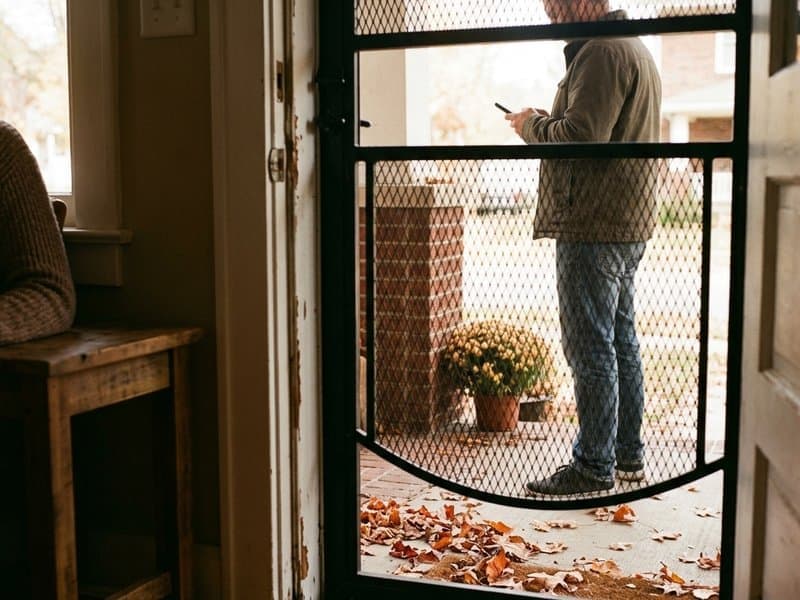
The 7 chimney sweep scam patterns — bait-and-switch deep clean upsell vs legitimate chemical treatment, fake Level 2, multi-alias SEO, unnecessary relining.
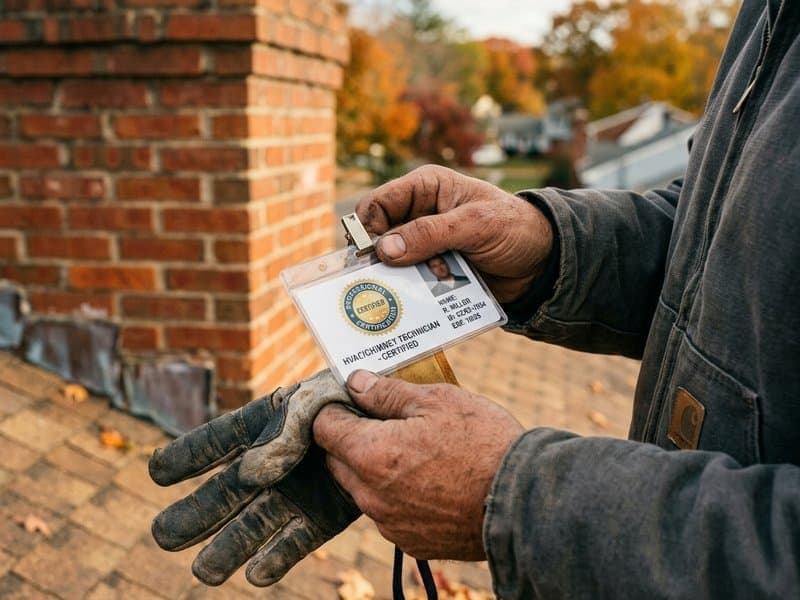
What CSIA certified chimney sweep status actually means, how to verify it, and why certification alone isn't enough to guarantee honest service.
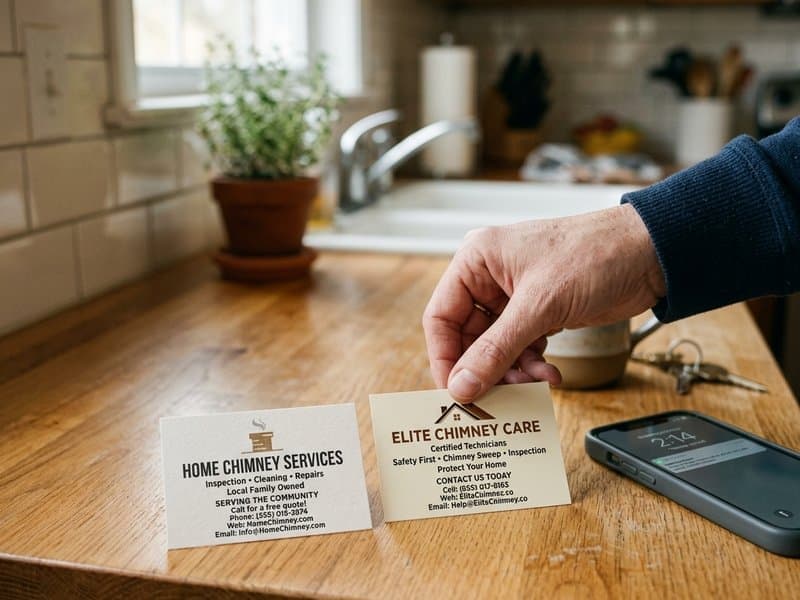
Second opinions consistently reduce chimney repair quotes by 50-90%. Learn when to get one, the anchor-avoidance strategy, and how to compare findings.