
Is My Quote a Scam?
Instant sanity check on any quote against verified pricing for your zip.
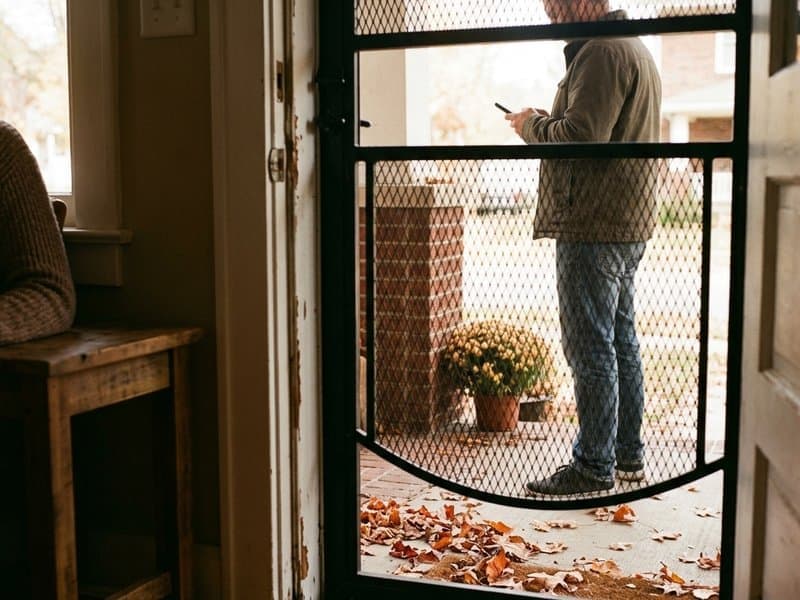
The chimney sweep industry has a documented, systemic scam problem. Thousands of homeowners every year encounter the bait-and-switch pattern (a $89-$125 advertised sweep that becomes $1,400 on arrival), receive five-figure repair quotes that a second opinion reduces to a few thousand, or are billed for work that was never performed inside a flue they cannot see. This is not a hypothesis — it is validated across 27 consumer sources, court filings, and metro-specific SERP audits that inform the FindChimneySweepers verification standard.
This guide documents the seven scam patterns we track and verify against. Each one is a distinct mechanic with its own red flags, its own consumer-protective response, and its own detection signal that an honest chimney sweep will pass and a dishonest one will fail. Read it once, keep it bookmarked, and use the tools linked throughout before you pay a single dollar on a quote over $300.
A word on positioning first. We are not an industry body and we are not here to defend the sweep profession in general. Legitimate chimney sweeps are among the most valuable tradespeople a homeowner will ever hire — a real one can detect a life-threatening fire hazard the morning it forms. But the market structure around the profession is broken in ways that attract bad actors, and the homeowner has no way to inspect the inside of a masonry flue without hiring another professional. That information asymmetry is what every scam pattern below exploits.
The most widely documented chimney sweep scam in the United States works by advertising an impossibly low sweep price, then inventing a fabricated upsell once the technician is on site. According to the VoC research that powers the FindChimneySweepers verification standard, this single pattern drives the largest share of complaints on Reddit, Hearth.com, and metro-specific homeowner forums.
The operator places ads — Google Local, Nextdoor, flyers, or their own site — for a chimney sweep priced somewhere between $89 and $125. That number is deliberate. It is set below what a legitimate sweep can afford to charge once labor, insurance, equipment, and travel are paid for. A real standard single-flue sweep costs between $175 and $350 depending on the metro. Anything lower than $150 is either a loss leader for upsell or a scam.
Once the technician arrives, the script runs. The tech inspects for a few minutes, then announces the chimney needs a "deep clean." The term "deep clean" does not appear in NFPA 211 as a prescribed service. The new quote is typically $650 to $1,400. Per-fireplace or per-flue multipliers are applied without prior disclosure. Security-camera footage in one documented case showed 18 minutes of total work billed at $988.62.
Important nuance: the bait-and-switch upsell is the scam — but professional chemical creosote treatment for verified 3rd stage glazed creosote IS a legitimate service, sometimes marketed by operators as "deep clean" or "premium clean." Legitimate pricing runs $900-$2,000 based on analyzed time and materials, using Poultice Creosote Remover (one of two professional products available). The difference between the scam and the real service is always documentation: a legitimate operator shows you video evidence of 3rd stage glazed creosote before recommending treatment, schedules it as a separate appointment, and never pressures you to decide on the spot.
The bait-and-switch upsell has none of that — no video evidence, no separate scheduling, no named product, immediate pressure. See deep-clean-myth for the full breakdown of how to tell the scam version from the legitimate service.
One homeowner documented in the VoC research booked a $99 advertised sweep. The technician arrived, ran a brush through the smoke chamber for roughly 15 minutes, then declared a deep clean was required. The final invoice was $1,388. No photos, no written inspection, no before-and-after documentation. A second opinion the following week from a CSIA-certified operator found the chimney was in good condition and required only a standard annual sweep at $225. Similar patterns appear across multiple metros — Phoenix, Denver, Atlanta, and the Northern Virginia corridor are particularly active.
Use the scam-quote-checker to benchmark any quote you receive against verified operator pricing for your metro. Read more about why deep clean is a red flag in deep-clean-myth.
A legitimate Level 2 chimney inspection under NFPA 211 requires three things the scam version skips: a professional video-scanning camera, a ladder capable of reaching the chimney top, and a documented written report with date-stamped photo or video evidence. The fake Level 2 substitutes phone snapshots and fear-based language for all of it, then closes with a five-figure repair quote.
The operator arrives without real inspection equipment. No Chim-Scan camera. No professional lighting. No ladder rated for the roof pitch. The tech spends between 10 and 30 minutes taking phone photos or no photos at all, then delivers a verbal finding: the chimney is "unsafe to use" and requires immediate repair. The repair quote lands anywhere from $5,000 to $31,000 depending on how much the scammer believes the household can pay.
Second opinions from CSIA-certified operators with real camera systems consistently find either that the chimney is safe as-is or that actual repairs cost $700 to $2,500. In one case documented in VoC threads, a $20,000 quote was reduced to $2,500 after a proper camera inspection by a legitimate operator. The gap between the two findings is not inspector disagreement. It is fraud.
The homeowner cannot see inside the flue. Without a professional camera, there is no way to independently verify a claim of damage. The scammer exploits information asymmetry and elevated fear — this scam is disproportionately common in three specific moments when homeowners are primed to act quickly: after a chimney fire, during a home purchase inspection, and after an insurance claim for storm damage. Some operators specifically advertise "free Level 2 inspections" as lead-generation for fabricated repair findings.
Use the inspection-level-decider to determine whether you actually need a Level 2 in the first place, and read inspection-levels for the full NFPA 211 breakdown.
Because the interior of a chimney is inaccessible to homeowners, a dishonest operator can bill for work they never actually did. This pattern is harder to detect than the bait-and-switch because the dollar amount is often reasonable — the issue is that the work itself was fabricated or substituted with a cheaper version the homeowner cannot verify.
The most documented variant is liner installation fraud. A homeowner is sold a stainless-steel liner install for $3,500. The installer arrives, works for several hours, and leaves. Nothing has been installed. The original clay tile remains in place. In one case confirmed in small claims court, the fraud was discovered only when the homeowner hired a second operator for a Level 2 inspection 90 days later. The camera found the original liner still in place — no new installation, no new material.
Parging fraud is a second variant. Parging is a cementitious smoke-chamber coating that is genuinely required on many older chimneys. The legitimate product costs $500-$800 in material and $1,200-$2,500 in labour. The scam: bill $2,000 for parging, apply Smoketite spray coating at 1/8-inch thickness instead (material cost under $50), collect the full parging fee. The homeowner has no way to inspect inside the smoke chamber to verify which product was applied.
The sweep-itself version is the hardest to catch. A legitimate sweep accesses the flue from both the top (cap removed, rods extended downward) and the bottom (damper removed, firebox inspection). Scammers routinely skip the rooftop work — especially on steep or tall roofs — and clean only the lower four to six feet visible from below. The upper sections, where creosote is thickest because flue gases cool near the cap, remain coated. The homeowner is billed for a full sweep.
Use the verify-work checklist after any service to assess whether the work was likely completed.
This scam is a Google Business Profile play rather than a door-to-door operation. A single operator — sometimes a call-center that subcontracts actual technicians — creates eight or more GBP listings under different business names in the same metro. Each listing has its own name, logo, and address, but every call routes to the same dispatcher. Eight suspected fake companies in Arizona were documented in the VoC research operating exactly this way.
The economics are simple. Each GBP effectively multiplies SERP real estate. One operation can appear in five or six different "local pack" slots for the same "chimney sweep near me" query. Consumers scrolling through results see what looks like multiple independent options — Top Chimney Pros, Chimney Kings, Elite Chimney Service, Metro Chimney Experts — and call one of them believing they are shopping between companies. Every number reaches the same dispatcher, who sends the same technician driving the same unbranded van.
Google Business Profile photos on these listings often reverse-image-search back to stock photo libraries. In one documented Phoenix case, photos traced to Czech Republic stock sources — the same stock library a wedding photographer in Prague might use for their hero image. Reviews come from Google accounts with two or three total posts, often clustered within a short time window (the tell-tale pattern of coordinated fake review purchases). The same phone number appears across "businesses" if you look, or the addresses resolve to UPS Stores, virtual offices, or suite numbers that do not physically exist.
The consumer harm is that no matter which listing the homeowner clicks, they reach the same scammer. Every option is rated 4.5 to 5 stars via fake reviews. The homeowner believes they have compared three independent operators, when they have simply called one operator three times. There is no way to "shop around" because every door leads to the same room.
This scam targets a specific vulnerability: a homeowner who has already decided to hire a particular local sweep, often based on a neighbour referral or a past positive experience. The scammer intercepts the booking, collects a deposit, and disappears. The legitimate company whose name was used has no record of the booking.
Three mechanics are common. The first is phone number spoofing — the scammer uses a VoIP service to display the legitimate company's phone number on caller ID when returning a call the homeowner placed to the real number. The second is a near-duplicate website with a one-letter domain difference, or a slightly altered business name (ABC Chimney Sweeps vs ABC Chimney Sweep Co). The third is paid Google Ads that use the real company's name as ad copy but route the click to the scammer's landing page.
The deposit ask follows. The homeowner is told a booking fee, materials deposit, or schedule hold is required before a technician can be dispatched. The amount is typically $300 to $1,500. Payment is demanded via cash, wire transfer, Venmo to a personal account, Zelle, or gift cards. None of these are payment methods a legitimate home-services operator uses for routine work. The deposit is taken. No technician ever arrives. When the homeowner calls the real company to ask where the tech is, the real company has no record of the booking.
A related variant involves unsolicited doorstep work. A stranger knocks, claims to be "from the company that did your sweep last year," offers a quick free inspection, "finds" a serious problem, and pressures immediate cash payment. The legitimate company whose name was used has no knowledge of the incident and often first learns about it when the furious homeowner calls.
Five companies quote the same chimney anywhere from $700 to $20,000. This is not a hypothetical — it is documented across multiple VoC threads where homeowners systematically collected quotes from five or more operators for the same job. The structural lesson: homeowners who accept the first quote routinely pay multiples of market rate, because the first quote is a negotiating anchor, not a diagnosis.
The variance comes from two sources. Honest disagreement accounts for some of it. A chimney with borderline crown damage can reasonably be quoted for either a $500 crown seal or a $3,000 full crown rebuild depending on the inspector's risk tolerance, the age of the masonry, and the expected service life requirement. Two reasonable inspectors can differ by a factor of three or four on a genuinely ambiguous repair scope.
Beyond that spread, variance signals either fraud or commission pressure. An operator whose technicians earn commission on repair work has a structural incentive to find repairs. Some national franchise operations pay technicians 15-25% commission on repair sell-through, which creates exactly the wrong incentive. Outright scammers fabricate findings to justify a price that matches their target profit margin rather than any actual job scope. This is how a chimney rated in good condition by three operators at $2,000 becomes a $20,000 rebuild quote from a fourth.
One documented homeowner in the VoC research collected quotes from five operators. Three rated the chimney in good condition and quoted $1,800-$2,500 for minor maintenance (crown seal, minor tuckpointing, cap replacement). Two quoted full rebuilds — one at $12,000, one at $20,000. The homeowner hired the middle of the three low quotes for $2,100. Two years later, the chimney is in the same condition with no structural issues detected on annual inspection.
Read quote-variation for the full breakdown of why repair quotes vary 10x and how to evaluate them.
The seventh pattern is the quiet one. It does not involve a five-figure fabrication or a $20,000 quote. It is the operator who recommends expensive repairs — relining, partial rebuilds, extensive tuckpointing — on a chimney that actually needs $700-$2,500 of routine maintenance. The dollar amounts are smaller than the fake Level 2, but the pattern is so common that it may affect more homeowners annually than any other scam on this list.
The mechanic is low-key pressure plus real-sounding language. The operator completes the sweep, then delivers the finding: the liner has minor cracks, the crown needs rebuilding, tuckpointing is required on the exterior masonry. The recommended scope is framed as preventive — not "unsafe" exactly, but "we should take care of this before it becomes a problem." The quote is $5,000 to $8,000. It is low enough that the homeowner does not reflexively seek a second opinion, but high enough that the operator earns a substantial margin on work that was not needed.
Second opinions from VoC threads consistently find one of two outcomes. Either the chimney is in good condition and needs nothing beyond the annual sweep ($150-$300). Or it genuinely needs minor maintenance — a crown seal, a cap replacement, a single section of tuckpointing — that adds up to $700-$2,500. The original $5,000-$8,000 scope was accurate about the chimney having minor issues and dramatically beyond what those issues actually required.
The upsell feels reasonable. Unlike the fake Level 2, which triggers suspicion at five figures, the $5,000-$8,000 range sits in the zone homeowners expect to pay for "real" chimney work. The operator uses correct technical terminology. Minor cracks do exist. Some tuckpointing is probably needed on a 30-year-old chimney. The scam is in the scope, not the diagnosis — recommending full relining when a crown seal would extend service life another 10 years, or full tuckpointing when spot repair would resolve the actual deterioration.
The signals below are the same ones the FindChimneySweepers verification standard uses to evaluate operators for the verified badge.
| Signal | Legitimate Sweep | Scam Operator |
|---|---|---|
| Advertised sweep price | $175-$350 | $89-$125 teaser |
| Arrival equipment | Branded vehicle, ladder, video-scan camera | Unmarked vehicle, no camera |
| Inspection documentation | Written report with date-stamped photos or video | Verbal findings, phone photos or none |
| Pricing conversation | Written quote before work begins | Verbal quote after arrival, pressure to decide |
| Repair language | Separates "essential" from "recommended" | Blurs them, pressures full scope |
| Payment methods accepted | Credit card, check, invoice | Cash, wire, gift cards, Venmo personal |
| Response to second opinion | Welcomes it, may refer you | Reacts negatively, pressures same-day |
| Legal entity | Named, state-registered business | Generic trading name, no state filing |
| CSIA certification | Displayed with number, verifiable | Claimed verbally, not verifiable |
| Deposit for routine work | None, or modest materials deposit only | Large upfront deposit before any visit |
| Photos on listing | Real photos of real team and vehicles | Stock photography, often reverse-image-findable |
If five or more rows of the left column describe your operator, you are probably dealing with a legitimate sweep. If three or more rows of the right column apply, stop and get a second opinion before any money changes hands.
Scam prevention is mostly about pre-screening. By the time a dishonest technician is standing in your living room, the decision environment is stacked against you. The homeowner is paying attention to completing the task, not evaluating the operator. Pre-screening moves the evaluation earlier, when you still have time and distance.
The FindChimneySweepers verification process combines four trust signals documented across 9+ Reddit threads as the strongest consumer trust indicators: personal or community referral, CSIA or NFI certification, documented local track record, and operator willingness to separate essential from recommended repairs. Verified operators are screened against these signals before the verified badge appears on their listing.
For homeowners, the short version of the process is:
Read the full breakdown in find-honest-sweep.
Technical review by John Zeron, Master Chimney Sweep, Master Hearth Professional — Closer to the Hearth Chimney Specialists
Browse 30+ guides, or jump straight to verified operators in your state.
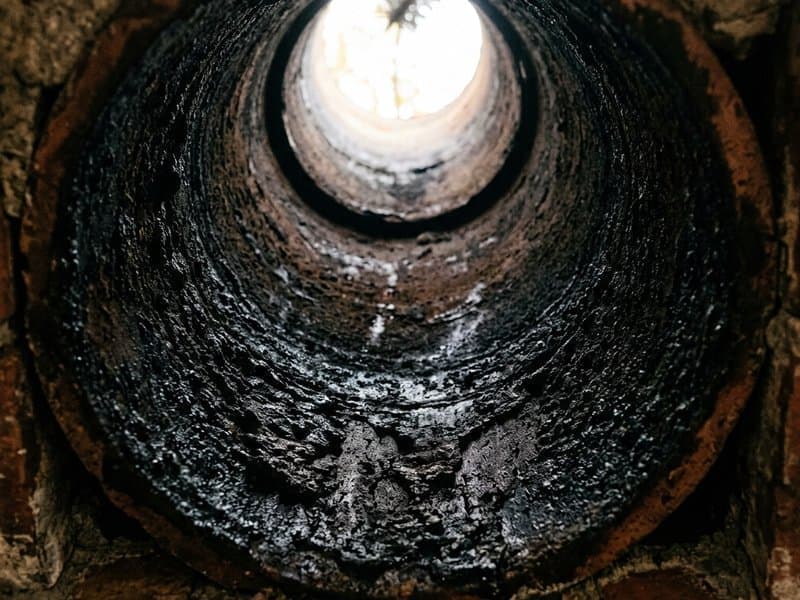
The $49-$99 'deep clean' upsell is a documented bait-and-switch. Professional chemical creosote treatment for 3rd stage glazed creosote is a legitimate $900-$2,000 service.
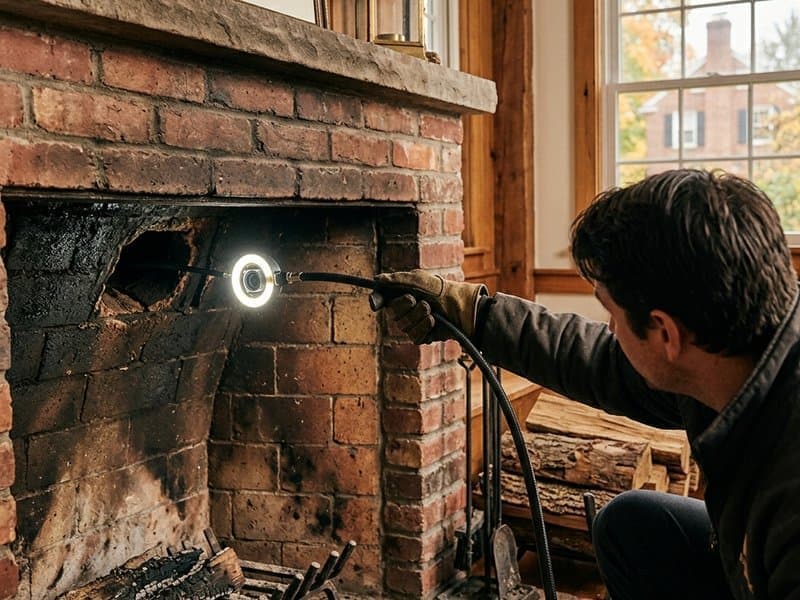
NFPA 211 inspection levels: Level 1 no camera, Level 2 video camera required. Each level includes all lower levels. Sweep durations, scope, scams to avoid.

Chimney repair cost varies from $700 to $20,000 for the same job. Why quotes spread 10x, how to evaluate them apples-to-apples, and when a high quote is justified.
Instant sanity check on any quote against verified pricing for your zip.
Find out if you actually need a Level 2 inspection — or if a Level 1 is enough.
Post-service checklist to verify the work was actually performed.