Creosote Risk Calculator
Estimate creosote buildup (Grade 1/2/3) based on fuel, usage, and time.
The short answer: NFPA 211, the national fire code standard that governs chimneys in the United States, specifies annual inspection for every chimney — but calls for sweeping only when needed. Those are two different services, and the distinction is where most homeowners pay for sweeps they don't actually need.
The long answer takes a few minutes and will save you money for the rest of your fireplace-owning life. This guide walks through what "when needed" actually means, how fuel type and usage change the answer, when annual sweeps are genuinely required, and when an operator pushing annual sweeps on low-use equipment is quietly padding revenue.
NFPA 211 Section 14.3 sets the standard. Chimneys, fireplaces, and vents should be inspected annually. Sweeping — the physical removal of creosote, soot, and debris from the flue — is warranted when 1/8 inch or more of soot or creosote has accumulated, or when any glaze or scale is present, or when obstructions are identified during inspection.
Re-read that. The standard is a condition threshold, not a calendar interval. A chimney with 1/32 inch of buildup after a year of light use does not need sweeping under NFPA 211. A chimney with 1/4 inch of buildup after three months of heavy green-wood burning needs sweeping immediately, regardless of how long it's been since the last clean.
The calendar interval people often quote — "you should sweep your chimney every year" — is a simplification that treats every fireplace as if it were the same. It isn't. A wood-burning fireplace used daily in Vermont accumulates creosote at a completely different rate than a gas fireplace used three times a year in Phoenix. The appropriate sweep frequency is a function of fuel, usage, draft quality, and wood moisture — not a default 12-month cycle.
"When needed" is the 1/8-inch creosote threshold. That threshold is measurable — a CSIA-certified inspector with a proper camera scan and a simple probe can show you exactly how much creosote is present and whether you've hit the threshold.
The practical translation for most homeowners:
The inspection piece is non-negotiable regardless of fuel type. Cracks in the liner, deterioration in the smoke chamber, flashing failures, animal nests, and crown damage are all things that can happen in a 12-month period and all things that need to be caught before they cause either a fire or a water-damage event. Skipping inspection to "save money" is the most expensive mistake in chimney maintenance.
Six specific variables determine how fast a chimney accumulates creosote and therefore how often it needs sweeping. Understanding them lets you evaluate your own situation rather than defaulting to a calendar.
Fuel type. Wood produces the most creosote, by a wide margin. Pellet stoves produce moderate ash accumulation (pellet ash is finer and different from wood creosote, but it still needs periodic removal). Gas produces almost none — gas fireplaces sometimes go 5-10 years between sweeps, though annual inspection is still required for carbon monoxide safety. Oil-fired furnaces that vent through a chimney produce a combination of soot and acidic condensation that demands annual sweeping.
Usage intensity. A fireplace lit 150 times in a winter accumulates creosote roughly 15x faster than one lit 10 times. The math is close to linear. If you use your fireplace for ambiance a few times per winter, the "annual sweep" dogma does not apply to you.
Wood moisture content. Seasoned hardwood (below 20% moisture) burns hot and clean. Green or wet wood (above 25% moisture) burns cold because most of the heat is being used to evaporate water, and the cooler, smokier fire produces 2-3x the creosote of a seasoned-wood fire. Wood moisture is probably the single largest variable a homeowner controls. A seasoned-wood burner on the same fireplace as a green-wood burner can have half the sweep frequency.
Chimney design. Modern insulated stainless-steel liners run hotter and produce less creosote than older uninsulated masonry flues. Exterior chimneys (built into an exterior wall with flue exposed on three sides to the outside) run cooler than interior chimneys (surrounded by heated living space on all sides) and therefore produce more creosote. Chimney height matters too — taller chimneys have better draft, hotter flue gases, and less creosote.
Draft quality. Poor draft (from insufficient chimney height, pressure imbalances in the house, negative pressure from exhaust fans, or nearby obstructions like tall trees) produces incomplete combustion, which produces more creosote. If your fireplace smokes into the room, fights to draft, or backs up during startup, you have a draft problem that's also a creosote problem.
Appliance type. An open masonry fireplace burns hot and draws a lot of excess air, which dilutes flue gases and produces less creosote per unit of wood. A closed wood stove or high-efficiency fireplace insert burns more slowly at lower temperatures by design — that's how it extracts more heat for the home — but those lower flue temperatures mean more creosote condensation. A high-efficiency insert may need more frequent sweeping than the open fireplace it replaced.
| Fuel Type | Usage | Sweep Frequency | Inspection |
|---|---|---|---|
| Wood — primary heat (daily) | Heavy | Annually, possibly mid-season | Annually |
| Wood — regular (several fires/week) | Moderate | Every 1-2 years | Annually |
| Wood — occasional (10-20 fires/season) | Light | Every 2-3 years | Annually |
| Wood — green or unseasoned | Any | Annually regardless | Annually |
| Pellet stove | Any | Annually | Annually |
| Gas fireplace | Any | Every 3-5 years or by inspection | Annually |
| Oil furnace (chimney-vented) | Any | Annually | Annually |
| Wood stove (primary heat) | Heavy | Annually | Annually |
These are guidelines, not mandates. The NFPA 211 standard is the 1/8-inch threshold; the frequency column above is what most homeowners in that usage profile will experience. Annual inspection is what tells you whether you're at the threshold.
A significant share of the unnecessary spending in the chimney sweep market comes from operators who push annual sweeps onto homeowners whose chimneys do not yet need sweeping. The VoC research has documented this pattern: gas fireplace owners billed for annual sweeps ($200-$400 per year) when their systems produce almost no creosote and the inspection report itself shows no buildup. Occasional wood-burning homeowners billed annually when their actual buildup is under the 1/8-inch threshold.
This is not necessarily fraud in the criminal sense — the sweep probably happened. But it's revenue padding. A $275 sweep performed annually on a system that needs it every three years represents $550 in unnecessary cost over the same period. Multiply across thousands of customers and that's the foundation of a business model.
The tell is the sales pressure. An honest operator does a visual check at the inspection stage, shows you the flue with a camera (or at minimum a mirror and flashlight), quotes the 1/8-inch rule by name, and says "you don't need a sweep this year — we'll look again at next year's inspection." That kind of honesty is the strongest trust signal in the VoC research — one 2023 thread described this exact interaction with "that sweep just got himself a customer for life."
An operator who books your annual inspection and then automatically does a sweep regardless of what the inspection finds — and bills you for both — is either cutting corners on the inspection (not actually checking) or padding the invoice. Either way, you're the one paying for it.
The reverse pattern exists too. Some situations justify more frequent sweeping than the guidelines suggest.
If you burn wood daily as your primary heat source and you live in a climate with a long heating season (7+ months), you may need a mid-season sweep in January or February in addition to your pre-season fall sweep. This is particularly true if you burn softwoods, green wood, or if your stove runs at low temperatures for long periods (a common setup for overnight burns).
If you've had a chimney fire — even a small one you barely noticed — sweep immediately and have a Level 2 inspection before the next fire. Chimney fires turn soft creosote into a glazed, hard deposit that is much harder to remove and much more flammable if reignited.
If you see a visible glaze on any portion of the flue interior during a between-sweep check, that's Grade 3 creosote and needs professional removal. Glazed creosote is the highest-risk form — it's highly flammable and indicates that your combustion conditions are producing excess creosote faster than normal.
If you're burning wood and notice unusual smoke behavior — smoke entering the room, draft reversals, unusual smells, or the fireplace "fighting" during startup — that's a signal of a partial flue blockage or draft problem that needs inspection before the next fire.
You can do a rough self-check between professional sweeps. This is not a substitute for a CSIA-certified camera inspection, but it's a useful tool for tracking buildup and deciding whether to call a sweep early.
Wait at least 48 hours after your last fire so the flue is cold. Open the damper fully. Using a strong flashlight and a small mirror (the kind on a telescoping dentist handle works well, available for $10 at any hardware store), look up the flue from inside the firebox.
What you're looking for: the texture of the flue interior walls. Fresh flue liner is grey (clay tile), silver (stainless steel), or smooth masonry. Light buildup looks like a dusty black coating. Moderate buildup looks flaky and scales off when scraped. Heavy buildup (the 1/8-inch threshold) is noticeably thick — you can see the texture clearly. Glazed buildup is shiny, hard, and looks like cooled tar. If you see glazing anywhere in the visible flue, stop using the fireplace until a professional sweep assesses it.
This check only sees the lower flue — the section most visible from the firebox. It does not tell you what the upper flue or smoke chamber look like. But it's a reasonable between-inspection spot check and it's free.
The single most important concept in chimney maintenance frequency: inspection and sweeping are two different services.
Inspection is evaluation. A Level 1 inspection is a visual check of readily accessible components — required annually for any chimney in regular use. A Level 2 inspection adds a video-camera scan of the flue and detailed evaluation of accessible portions — required at property transfer, after a chimney fire, after any event that could have damaged the chimney (earthquake, lightning strike, roof damage), and when switching fuel types. A Level 3 inspection involves partial removal of walls or ceilings to access hidden portions — required only when Level 2 findings point to concealed damage.
Sweeping is physical cleaning. Rods, brushes, vacuums, containment. The technician runs the brushes through the flue, removes the accumulated creosote or soot, and cleans the smoke chamber and damper area.
You need an inspection every year. You need a sweep when the inspection (or a self-check) shows you're at or above the 1/8-inch threshold. Bundling them as one service — "annual chimney cleaning" — is how operators get paid for two services when only one is warranted. On the flip side, refusing to let a sweep inspect because "we just swept last year" is how people miss cracked liners, failed flashings, and animal nests. Inspect annually. Sweep when needed.
Browse 30+ guides, or jump straight to verified operators in your state.
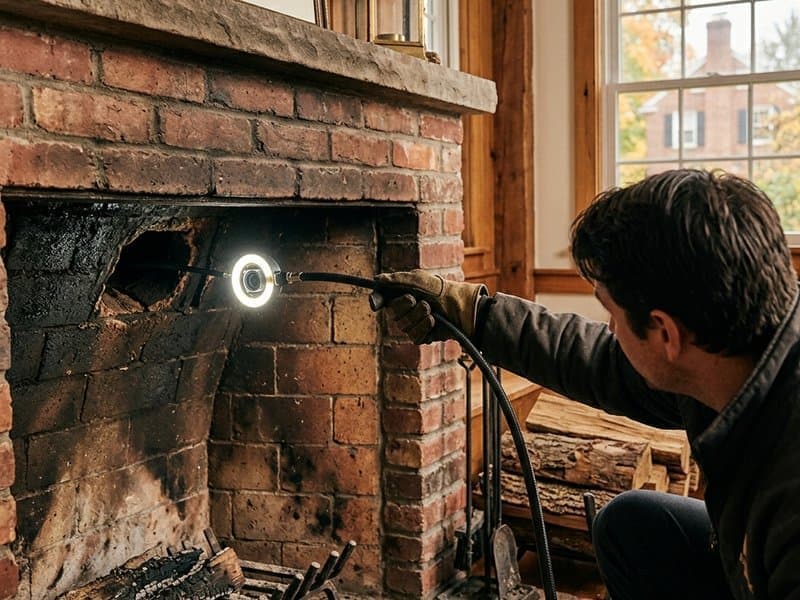
NFPA 211 inspection levels: Level 1 no camera, Level 2 video camera required. Each level includes all lower levels. Sweep durations, scope, scams to avoid.

Just bought a house with a fireplace? The complete first-time owner guide — inspections, maintenance, costs, and how to avoid scams in year one.
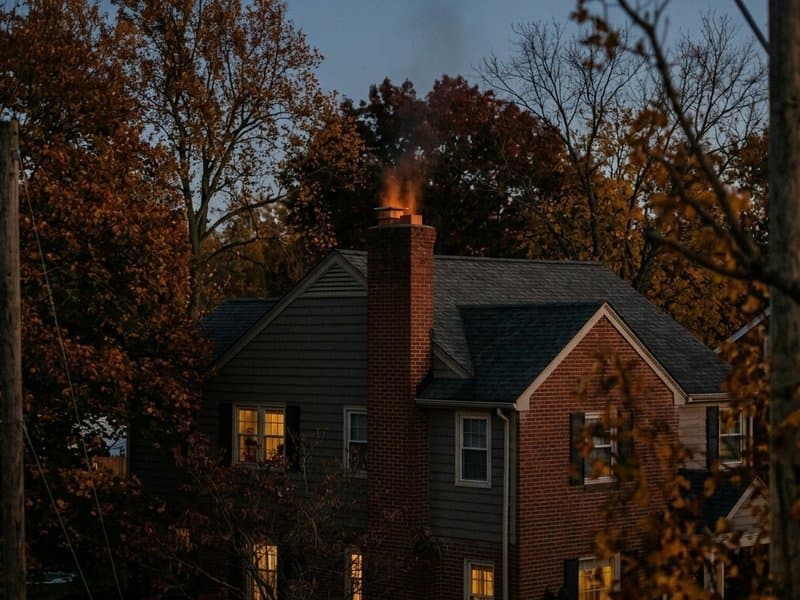
Chimney fire prevention guide — how they start, warning signs during and after, emergency steps, and the 8-item prevention checklist that actually works.
Estimate creosote buildup (Grade 1/2/3) based on fuel, usage, and time.
Personalised sweep/inspection calendar — reminders before peak season.
Find out if you actually need a Level 2 inspection — or if a Level 1 is enough.