
Is My Quote a Scam?
Instant sanity check on any quote against verified pricing for your zip.
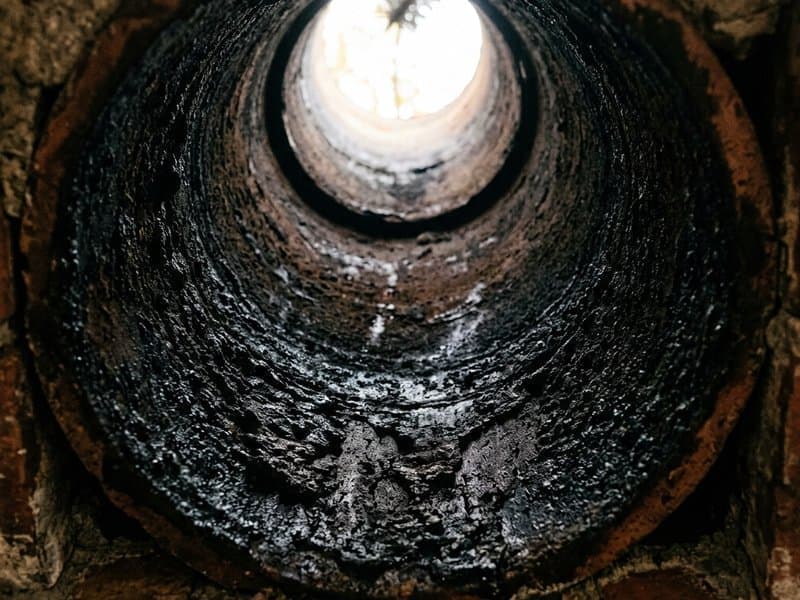
The "$49 deep clean" upsell during a routine sweep is a documented bait-and-switch. Professional chemical creosote treatment for 3rd stage glazed creosote — sometimes marketed as a "deep clean" or "premium clean" by legitimate operators — is a real, expensive, labor-intensive service that legitimately costs $900 to $2,000. The difference between the scam and the real service is not the name. It's the behavior: documentation, scheduling, video evidence, and the absence of on-the-spot pressure.
The term "deep clean" does not appear in NFPA 211 as a prescribed service category. It also does not appear in CSIA or NFI training materials as a defined deliverable. But that absence cuts in two directions. It means an operator using the phrase as an on-site upsell ($89 booking → $1,200 deep clean) is invoking a service that has no standardized definition and no measurable scope — which is exactly why bait-and-switch operators favor the term. It also means the absence of the phrase from the standards does not, by itself, prove fraud — because Poultice Creosote Remover and similar professional chemical treatments for 3rd stage glazed creosote are real services that some legitimate operators market under that label. This article tells you how to tell which one you're dealing with.
The classic bait-and-switch:
Red flags that mark this as the scam version:
The term "deep clean" does not appear in NFPA 211 as a prescribed service. The scam exploits homeowners' assumption that chimney services have tiers like car washes have tiers — basic, premium, full detail. They don't. NFPA 211 defines standard sweeping plus three inspection levels; everything else is repair work or specific chemical treatment with documented justification.
Professional chemical creosote treatment using Poultice Creosote Remover for 3rd stage (glazed) creosote that cannot be removed by rotary sweeping. Two professional Poultice products are currently available, and application methods differ between smoke chambers and flues — they are not the same surface and the chemistry is applied differently for each.
What makes this version legitimate:
The difference between the scam and the real service is not the name — it's the behavior. A legitimate chemical creosote treatment is scheduled in advance based on a documented video inspection showing 3rd stage glazed creosote. A scam "deep clean" is an on-the-spot upsell with no documentation, no video, and immediate pressure to pay.
| Dimension | Scam "deep clean" | Legitimate chemical treatment |
|---|---|---|
| Trigger | Tech "discovers" creosote on the routine sweep visit | Video inspection at a prior visit documents 3rd stage glaze |
| When quoted | On site, during the visit | Scheduled separately after video evidence |
| Documentation | Verbal only, often no photos | Video before, photos during, video after |
| Decision pressure | Same-day decision required | Time to research, get second opinions |
| Price | $650-$1,400 quoted on the spot | $900–$2,000 based on analyzed time and materials |
| Materials | Often unspecified | Named professional product (Poultice Creosote Remover, one of two products available) |
| Application method | Vague | Differs between smoke chamber and flue, explained in advance |
| Slake time | Not discussed | Disclosed as part of the labor — chemical reaction takes time |
| Post-treatment | None | Camera verification that the glaze has been removed |
| Bundled with sweep? | Yes — replaces the sweep that was booked | No — separate appointment with its own scope |
NFPA 211 is the national standard published by the National Fire Protection Association governing chimneys, fireplaces, vents, and solid-fuel-burning appliances. It defines four consumer-facing service categories: standard sweep, Level 1 inspection, Level 2 inspection, and Level 3 inspection.
Standard sweep removes creosote and soot from the flue using brushes (standard or rotary), accesses both top and bottom of the flue, and cleans the smoke chamber and firebox. Duration: 45-90 minutes for a standard single-flue masonry chimney. Cost: $150-$300 in most US metros.
Level 1 inspection is the annual inspection for a chimney with no changes to the system and no known hazards. The inspector examines all readily accessible portions of the chimney exterior, interior, and accessible portions of connected appliances. A camera is not required for Level 1; rooftop access is not within the scope of Level 1 since it may require OSHA-compliant fall protection. Duration: 30-60 minutes added to a sweep visit. Cost: $100-$250.
Level 2 inspection is required when the system has changed (new appliance, change of fuel, damage event, home sale). It includes everything in Level 1 plus a video camera inspection of the flue interior and inspection of accessible attic, basement, and crawl space portions. A video camera IS required for Level 2 — phone photos do not satisfy the standard. Duration: ~1 hour added to a sweep visit. Cost: $250-$500.
Level 3 inspection is required when Level 2 indicates a hidden hazard. It includes partial demolition to access concealed areas. Duration: half-day to full-day. Cost: $1,000-$5,000 depending on scope.
NFPA 211 §14.6 also governs cleaning methods: "Cleaning of chimneys, if necessary, shall be done by methods that do not impair structural or thermal performance." This is the section that legitimately authorizes chemical treatment of 3rd stage creosote — the rotary chains historically used to break up glaze posed too high a risk of damaging the flue lining and are no longer recommended.
What NFPA 211 does not define is a service called "deep clean." If an operator uses the phrase, they should be able to specify which real service they mean (chemical creosote treatment for documented 3rd stage glaze, almost always) and produce the video evidence that justifies it.
The four-question test below distinguishes the scam version from the legitimate service in under sixty seconds.
A legitimate chemical treatment is recommended only after video has documented 3rd stage glaze in the flue. A scam "deep clean" is recommended after a verbal-only inspection or no inspection at all. You should be able to see the footage of the glaze before agreeing to treatment.
Legitimate chemical treatment requires materials to be brought to the site, time to apply, slake time for the chemical reaction, and follow-up verification. Operators do not typically carry it as a default kit on routine sweep visits. If "deep clean" is being offered as a same-day add-on with no prior scheduling, the offer is almost certainly the scam version.
Legitimate Poultice Creosote Remover is one of two professional products. An operator selling chemical treatment should be able to name the product, describe how it differs in smoke chamber vs flue application, and discuss the slake time. A scam operator will speak in vague generalities — "stronger chemicals", "deeper cleaning", "professional-grade".
Legitimate chemical treatment runs $900–$2,000 based on analyzed time and materials — a price the operator can break down into preparation, application, slake time, removal, and post-treatment camera verification. A scam "deep clean" is a flat number designed to maximize the bait-and-switch — typically $650-$1,400, with no breakdown.
If the answer to all four questions is yes, you are being offered the legitimate service. If even one is no, slow down and get a second opinion before authorizing any work.
This script returns the conversation to documentation. Most scam operators won't follow you into specifics; most legitimate operators will.
When the technician says "you need a deep clean":
You say: "Can you show me the video of the creosote you're concerned about, and tell me which specific product you'd apply — is this for 3rd stage glazed creosote that needs Poultice Creosote Remover?"
A legitimate operator will be able to show the video and discuss the chemistry. A scam operator will pivot — to urgency ("your chimney is dangerous to use today"), to authority ("this is what all the good sweeps do"), or to a vague reframe ("deep clean is just our heavier service").
If the response is pivot rather than evidence, the next line is:
You say: "I'd like the written estimate for a standard sweep only — let's complete the work that was booked. I'll get a second opinion before approving any chemical treatment."
A legitimate operator will provide the standard sweep estimate, complete the booked work, and offer to provide video documentation that the homeowner can take to a second opinion. A scam operator will often leave without completing the sweep — the scam was the upsell, not the sweep itself, and a $150 standard sweep is not worth their time once the upsell has failed.
A reasonable question: if the scam version is well-documented, why don't certification bodies police the term? CSIA and NFI are voluntary certification bodies, not regulatory agencies. They certify individual sweeps. They have no enforcement authority over operators who are not members, and the operators running bait-and-switch scams are almost never CSIA or NFI certified.
The longer answer involves the structure of the chimney sweep market. Only North Carolina mandates chimney-sweep-specific certification under state fire code. New Jersey has proposed it (S352). All other states regulate chimney sweeps under general contractor frameworks, which have no chimney-specific terminology requirements. An operator in 48 states can call their service anything they want — deep clean, premium clean, platinum clean — and no state agency will correct them.
The correction comes from informed homeowners who know that the right question is not "is 'deep clean' a real term?" but "where's the video that justifies chemical treatment?" — and from directories like FindChimneySweepers that screen operator behavior, not just operator vocabulary.
Technical review by John Zeron, Master Chimney Sweep, Master Hearth Professional — Closer to the Hearth Chimney Specialists
Browse 30+ guides, or jump straight to verified operators in your state.
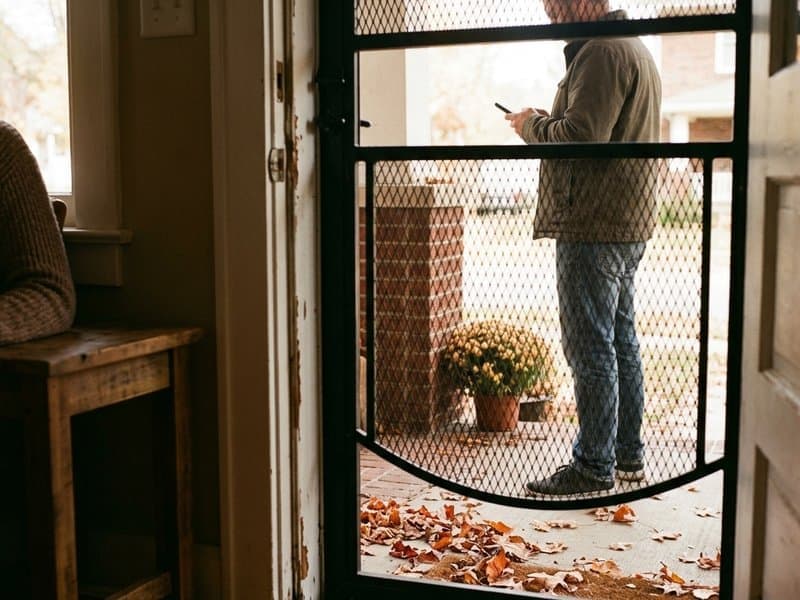
The 7 chimney sweep scam patterns — bait-and-switch deep clean upsell vs legitimate chemical treatment, fake Level 2, multi-alias SEO, unnecessary relining.
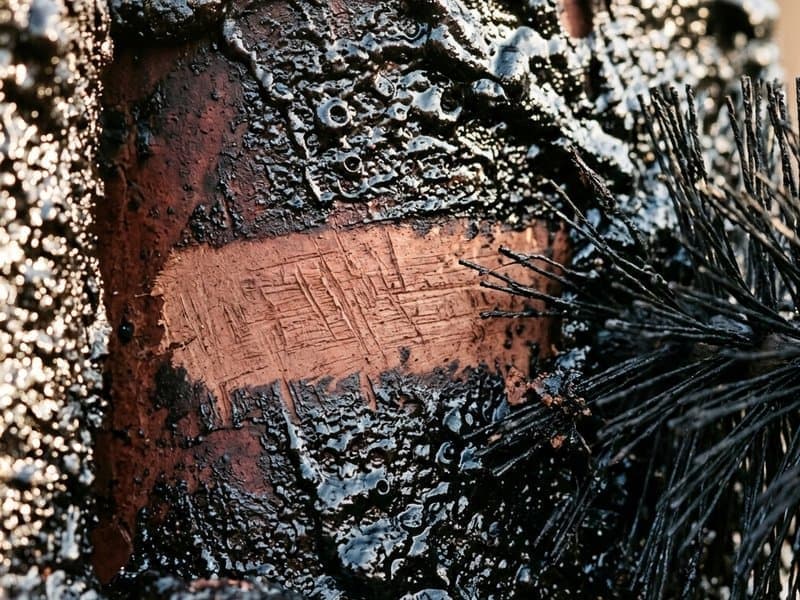
Creosote 1st, 2nd, 3rd stage and expanded creosote (chimney fire evidence). Why video inspection must precede sweeping. NFPA 211 §14.6 cleaning methods.
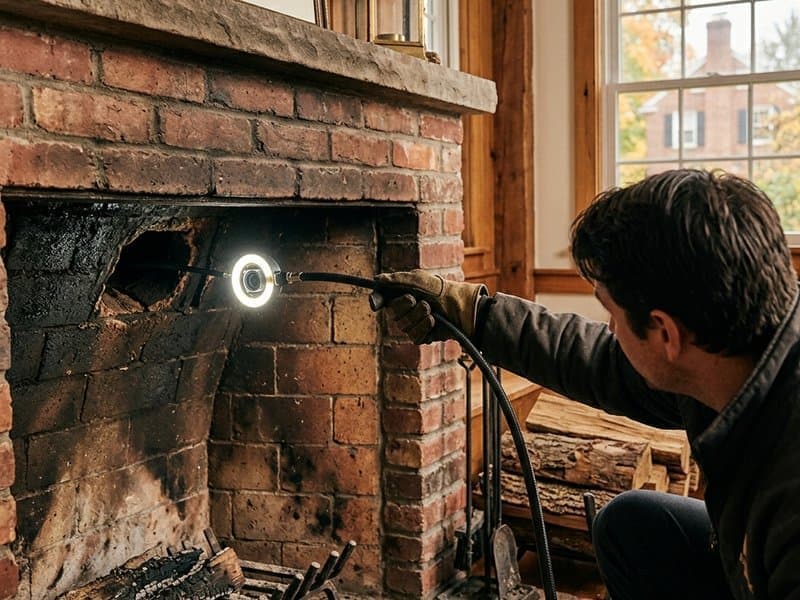
NFPA 211 inspection levels: Level 1 no camera, Level 2 video camera required. Each level includes all lower levels. Sweep durations, scope, scams to avoid.