
Did My Sweep Do the Work?
Post-service checklist to verify the work was actually performed.
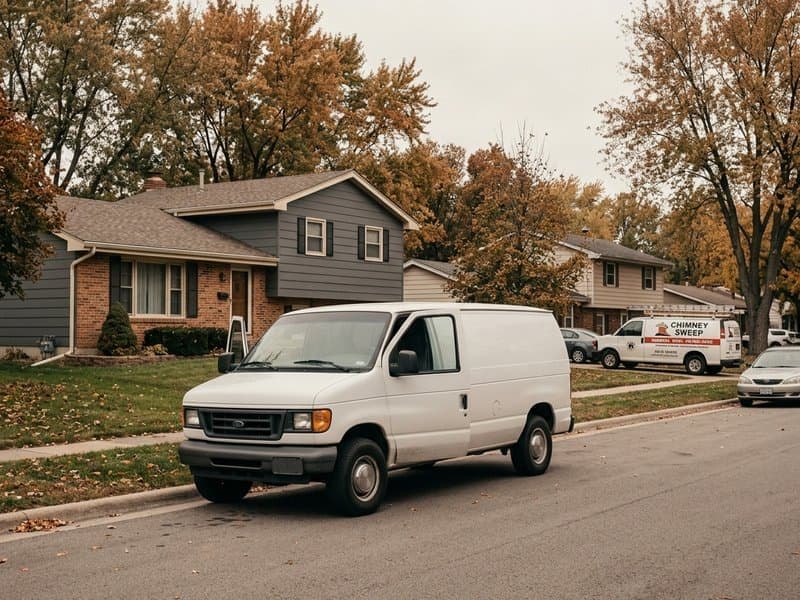
A homeowner in Phoenix calls what she thinks is a local chimney sweep she found on Google. The name matches a legitimate multi-decade Phoenix business. The price is reasonable. The technician arrives, collects a $600 deposit in cash for "parts" needed to complete the inspection, and says he'll be back tomorrow to finish. He never comes back. When she calls the real company to complain, they tell her they have no record of her appointment, and she's the fourth person this month calling them about work their company never did.
This is the impersonation scam — distinct from bait-and-switch, distinct from fake Level 2 findings, distinct from the wildly inconsistent repair quotes that define other chimney scams. The impersonation scammer isn't a bad contractor. The impersonation scammer is an identity thief. They steal the reputation of a legitimate company, cash in on customer trust that took decades to build, and vanish before anyone realises the fraud. The real company gets the complaints. The scammer takes the money. And in many cases, the homeowner has no realistic path to recovery because the operator they paid didn't exist.
This guide covers the mechanics of how chimney company impersonation works, the related multi-alias SEO pattern, the specific verification steps that defeat these scams, and what to do if you realise you've been impersonated or scammed.
Impersonation scams follow a predictable playbook. Understanding the mechanics lets you recognise the scam while you're being targeted, not after.
Step 1: The scammer chooses a legitimate target. Usually a local chimney company with a multi-year operating history, decent Google reviews, a real physical address, and active search rankings. The target's reputation is the asset the scammer is stealing. A fly-by-night competitor wouldn't be worth impersonating — there's no earned trust to exploit.
Step 2: The scammer creates a near-clone business presence. This might be a Google Business Profile with a name one letter different from the target ("Smith's Chimney" vs the real "Smith Chimney Services"). It might be a website with the target's photos, styling, and branded colours but a different phone number. It might be a phone listing that uses the target's name with a VoIP number that routes to the scammer. The goal is search-result proximity — when a homeowner types the target's name into Google, the fake listing appears close enough to be clicked by mistake.
Step 3: The scammer runs paid traffic. Google Ads under the target's name, paid directory listings, and occasionally SEO manipulation to push the fake site into organic rankings. In the most aggressive variants, the scammer buys the target's own brand keywords as ad terms — so when a customer searches "[real company name] phone number," the scammer's ad appears above the real company's Google Business Profile.
Step 4: The first contact is normal. The scammer answers the phone, quotes a price that's often slightly below the real company's rates (to reinforce the "this is a good deal" feeling), and books an appointment. At this stage, the interaction is indistinguishable from a legitimate booking.
Step 5: The deposit ask. This is the core of the fraud. Before work begins, or before materials are ordered, or before a "specialist" can arrive, the scammer demands a deposit. The deposit is usually substantial — $300-$1,500 — and is demanded in non-traceable payment forms: cash, wire transfer, gift cards, Venmo to a personal name, Zelle to an unknown recipient, or cryptocurrency. Legitimate chimney companies accept credit cards and checks. They do not demand cash for parts, and they do not require wire transfers or gift cards for anything.
Step 6: Work is performed badly, or not at all. In the most brazen variants, no work is performed — the "technician" collects the deposit, says he'll be back, and disappears. In subtler variants, minimal work is performed (a quick cosmetic sweep, a spray-can "waterproofing") to create the appearance of service before the scammer vanishes with the deposit.
Step 7: Complaints go to the real company. The homeowner calls the number they think they called before (the real company's number) and reports the missing contractor. The real company has no record. The homeowner is often blamed for not finding a "legitimate" contractor, when in fact she called exactly who she thought she called.
A related pattern — technically distinct from direct impersonation but operationally similar — is the multi-alias SEO operation. Instead of impersonating one legitimate company, the scammer operates multiple fake companies simultaneously, each with a unique name but the same underlying operation.
The documented pattern in Arizona surfaced 8+ suspected fake chimney companies operating under different names from the same base operation. The indicators were specific and reproducible: Google Business Profile photos reverse-image-searched to stock photography sourced from European agencies (in one case, photos traced to Czech Republic stock libraries). Reviews posted from Google accounts with only 2-3 total reviews in their history — suggesting reviewer accounts created specifically to pad the fake businesses. Multiple "companies" sharing the same phone number or the same cluster of near-identical VoIP numbers. Physical addresses that traced to mail drops, UPS Store addresses, or no location at all.
The multi-alias pattern is harder to detect from a single interaction because each alias presents as a small legitimate operator. The detection comes from looking across multiple local companies and finding the network effects — shared phones, shared photos, shared review accounts, shared addresses. This is part of why we cross-reference phone numbers across our directory and flag matches internally; it's also why we require real operator contact through the claim flow before a badge appears on a listing.
The VoC research surfacing these patterns documents several recurring behaviours that consumers can use as screening signals:
Large deposits demanded before the technician visits. Legitimate operators do not demand upfront deposits for standard chimney services. A sweep costs what it costs; you pay after the work is done. Deposits for scheduled installation work (liner installation, for example) are legitimate — but 20-30% of the job cost, not 50-80%, and paid by check or card, not cash.
Payment demanded via cash, wire, gift cards, or cryptocurrency. This is the single most reliable scam signal across all home service fraud. Legitimate operators accept credit cards because processing fees are trivial against the marketing cost of losing a sale. Scammers refuse credit cards because chargebacks would unwind their scheme.
A phone number that doesn't match the company website. Scammers often route calls through VoIP to avoid leaving traces. When you call the number on a business card or flyer, it rings to a scammer's phone bank. The number on the real company's website goes to the real company.
Google Business Profile created within the last 12 months, claiming decades of experience. Legitimate multi-decade companies have GBPs created years ago with consistent review accumulation. Scam GBPs are new, and their review histories are strange — bursts of 5-star reviews over short periods, reviewer accounts with 1-3 total reviews, reviews that read oddly similar in structure.
No branded vehicle, no uniform, no physical card. Legitimate operators drive vehicles with their name and phone number. They wear uniforms or branded shirts. They hand you a physical business card with a verifiable address. The absence of these signals is not itself proof of fraud — some small operators run lean — but the absence of all of these simultaneously is diagnostic.
The verification process is straightforward and takes five to ten minutes. Run it before you book any chimney service, especially if the operator contacted you (via flyer, ad, door-knock, or unsolicited call) rather than being a company you chose independently.
If the search returns a consistent set of results — the same name, same phone number, same address across Google Business Profile, their website, Yelp, and the BBB — the business identity is consistent. If the name and phone number appear in unrelated contexts, or if multiple different companies show up with the same name, you've found evidence of either impersonation or a multi-alias operation.
Google Ads at the top of search results can be bought by anyone willing to pay, including scammers targeting legitimate brand names. If you're searching for a specific company you've heard about, type their URL into your browser directly rather than clicking the top ad. The ad may route you to the scammer; the direct URL reaches the real company.
If the original contact came from a flyer, a door-knocker, or a business card, don't call that number back. Find the company's official website (by searching their full business name + city) and call the number listed there. If the numbers don't match, the original contact was the scammer.
Search the company's name on Google Maps. Scroll through the reviews. A legitimate multi-year business has reviews accumulated over years, from Google accounts with varied review histories. Scam profiles have concentrated review bursts, reviewer accounts with 1-3 total reviews, and sometimes reviews that contain oddly specific phrases repeated across reviewers.
Legitimate operators drive vehicles marked with the company name, phone number, and sometimes a state license or CSIA badge. If the technician arrives in an unmarked vehicle or a vehicle whose name doesn't match the company you called, stop the interaction and verify by calling the main office number from the company's official website.
The address on the business card should match the address on the website should match the address on the Google Business Profile. If any of these three don't match, something is wrong.
Cash, wire transfer, gift cards, Venmo to a personal name, Zelle to an unknown recipient, cryptocurrency — none of these are legitimate payment methods for a chimney sweep. If the operator refuses credit cards and checks, walk away. The payment method is not a minor issue; it is the scam in plain view.
| Verification Item | Legitimate Company | Impersonator |
|---|---|---|
| Phone number matches website | Yes, consistent everywhere | Different numbers across listings |
| Website URL matches business name | Yes, established domain | New domain, typosquat, or none |
| GBP age | Multiple years, steady reviews | Under 12 months, review bursts |
| Review reviewer accounts | Varied histories, long-tenured | 1-3 total reviews per account |
| Physical address | Verifiable, same across listings | Mail drop, PO Box, or missing |
| Vehicle marking | Company name, phone, license | Unmarked or mismatched |
| Uniform/ID | Branded shirt, company ID | None |
| Business card | Handed over, verifiable address | Not offered or mismatched |
| Payment methods | Credit card, check, sometimes cash | Cash-only, wire, gift cards |
| Deposit requirement for sweep | None | Large upfront deposit |
| Certification verifiable | Number provided, verifiable at search.csia.org | Claimed without number |
| Years in business | Specific, verifiable | Vague, unverifiable |
If you run a legitimate chimney company and you're receiving complaints from customers about work you didn't perform, you're almost certainly being impersonated. The response is structured.
Document the complaints. Every call about missing work you didn't do is evidence. Record date, customer name and phone, what they say the "technician" did, how they paid, and what contact info they have for the person who did the work. This is your case file.
Report the fake Google Business Profile. If you can identify a fake GBP using your name, report it through Google's "Suggest an edit" feature and file a trademark/impersonation complaint through Google's legal reporting channel. Response times vary — Google is slow — but the reports create a paper trail.
Alert your customers. A clear post on your website, email to your customer list, and social media announcement describing the impersonation pattern and the correct way to verify you (your real phone number, your real website URL) reduces the number of your customers who will be fooled going forward.
File complaints with regulators. Your state attorney general's consumer protection division, the FTC at reportfraud.ftc.gov, and the BBB all accept impersonation reports. The individual complaints rarely produce immediate action, but patterns accumulate — if enough operators in one metro are being impersonated by the same operation, enforcement can follow.
Consider legal action. Trademark infringement and fraud are both actionable. A cease-and-desist letter from an attorney is inexpensive and occasionally effective. Civil action is expensive but available if the impersonation is causing measurable damage to your business.
If you paid a scammer who was impersonating a legitimate company, time matters. The sooner you act, the higher the chance of recovery.
Contact your bank or card issuer immediately. If you paid by credit card, file a chargeback for "services not rendered" — you have up to 120 days from the transaction date under most card agreements. If you paid by debit card, the dispute process is similar but tighter. If you wrote a check, contact your bank to stop payment if the check hasn't cleared; if it has cleared, the bank may still be able to reverse the transaction for fraud, though success is less certain.
If you paid via wire, gift cards, Venmo, Zelle, or cryptocurrency — act within hours. These payment methods are designed to be final, and recovery is often impossible after 24-48 hours. Call the service immediately, report the fraud, and request reversal. Success rates are low but not zero.
File a police report. The local jurisdiction where the "work" happened is the correct jurisdiction to report. A police report establishes the crime on record, produces a case number, and is required for some insurance and financial recovery processes. Do not skip this step even if the police seem dismissive.
Report to federal authorities. The FTC's reportfraud.ftc.gov takes fraud reports that feed into federal enforcement databases. The FBI's IC3 (Internet Crime Complaint Center) handles fraud involving internet elements — Google Ads, fake websites, email scams. Both are free; neither guarantees recovery but both build the case against the operation.
Report the fake Google Business Profile. Even after you've been scammed, reporting the fake GBP protects future victims. Google's "Suggest an edit" feature accepts user reports. Be specific: "This listing is fraudulent. I was scammed by this operator on [date]."
Contact the real company. The legitimate chimney company being impersonated will want to know, both to protect their reputation and to assist their own investigation. Share what you know — the phone number that called you, the address of any paperwork, the name of the "technician."
Document everything. Every text message, every call log, every invoice or receipt, every photo of the "technician's" vehicle or uniform. This is evidence for chargeback disputes, police reports, and civil action if recovery becomes feasible.
A clean set of payment rules defeats every chimney impersonation scam in this article. Memorise these five rules.
Rule 1: Never pay cash-only for chimney services. Legitimate operators accept credit cards. Processing fees are under 3% of the transaction; the cost is routine business expense. Cash-only is a scam marker, not a business preference.
Rule 2: Never wire money to a chimney operator. Wire transfers are final, untraceable, and not reversible. No legitimate operator requires wire payment for residential chimney work. If wire is the only option, the operator is a scammer.
Rule 3: Never pay via gift cards. This is not a theoretical concern — gift card scams are documented across every home services vertical. A chimney sweep who asks you to pay in Home Depot, Target, or Apple gift cards is a scammer, full stop.
Rule 4: Never pay a large upfront deposit for a standard sweep or inspection. Legitimate sweeps and inspections are paid on completion. Small scheduling deposits (under 10% of the expected total) are acceptable for booking. Fifty-percent-plus deposits for standard work are strong red flags.
Rule 5: Never pay the full cost before the work is complete. Even for legitimate operators, pay after the work is done. Full payment upfront with no paperwork is how work-billed-but-never-performed scams succeed.
Browse 30+ guides, or jump straight to verified operators in your state.
The 7 chimney sweep scam patterns — bait-and-switch deep clean upsell vs legitimate chemical treatment, fake Level 2, multi-alias SEO, unnecessary relining.

The 10 trust signals that separate honest chimney sweeps from scammers. Vetting questions, verification steps, and how to avoid paying 10x market rate.

The complete list of questions to ask your chimney sweep before, during, and after the visit. Good answers, red-flag answers, and what they reveal.