
Cost Estimator
See what verified chimney sweeps charge in your area for each service.
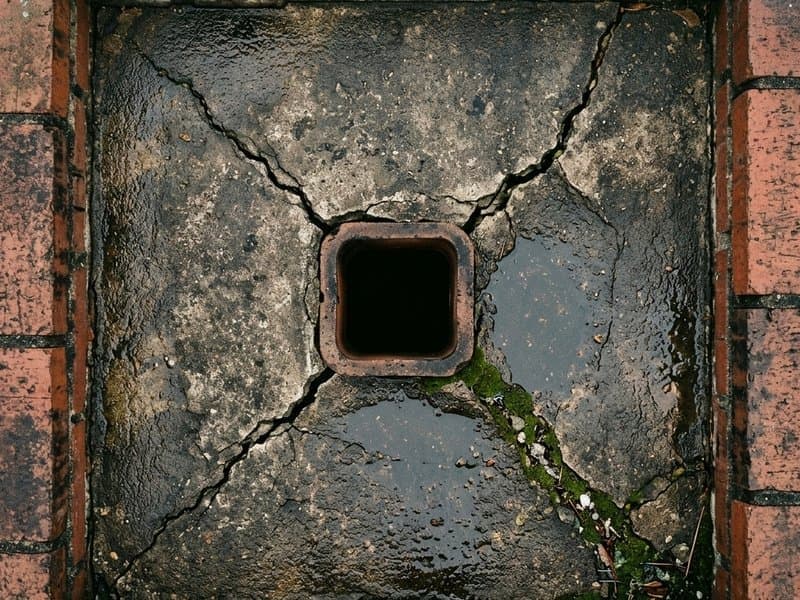
The chimney crown is the concrete slab on top of a masonry chimney that seals the gap between the flue liner and the outer brick walls. When it cracks, water enters the chimney mass, erodes the mortar from inside, and produces the cascade of damage that legitimate sweeps — and scammers — then quote to repair. The crown itself is a $150-$2,000 repair depending on severity, but it is also the most common justification cited for $5,000-$10,000 rebuild quotes that are not actually required. Understanding the severity-based repair hierarchy is how you avoid overpaying.
This guide is the consumer reference for chimney crown repair. It covers what the crown is (and is not — it is not the cap, and it is not the chase cover), why crowns crack, how to assess severity, and the four-tier repair options from $150 sealant to $2,000 full rebuild. If an operator has quoted a crown rebuild above $2,000 for a standard single-flue chimney, read this before agreeing.
A chimney crown is the poured-concrete (or mortar) slab sitting on top of the chimney masonry. It slopes downward from the flue liner outward to the chimney edge, sealing the gap between the brick and the flue while directing water away from the chimney interior. Every masonry chimney has one. It is the top horizontal surface you see when you look down at a chimney from the roof.
A properly built crown has four characteristics:
Older chimneys and cheaply-built modern chimneys often fail all four. The crown is actually mortar (not concrete), has no overhang, has little or no slope, and bonds directly to the flue liner. These crowns develop cracks within 10-15 years of construction and fail progressively from there.
Three components live on top of a chimney and get confused constantly. Understanding the distinction matters because operators sometimes exploit the confusion to upsell.
Crown. The concrete slab on top of a masonry chimney. Seals the gap between the flue and the outer brick. What this article is about.
Cap. The metal cover that sits ON TOP of the crown, over the flue opening. Prevents rain, animals, and sparks. Covered in detail in chimney-cap-guide.
Chase cover. The large sheet-metal top of a factory-built (prefab) metal chimney. Covers the entire chase top, not just the flue. Only exists on prefab chimneys, not masonry chimneys.
The upsell pattern: an operator quotes "crown repair" on a prefab chimney. Prefab chimneys do not have crowns — they have chase covers. The repair being quoted is actually a chase cover replacement. Conversely, an operator quoting "cap replacement" on a masonry chimney when the actual issue is crown deterioration is understating scope. Each component has its own repair scope and its own price range; conflating them muddies the quote.
If you are uncertain which component your chimney has, look at the material around the flue. Brick or stone = masonry chimney (has a crown). Metal siding or wood-framed chase = prefab chimney (has a chase cover).
Crowns crack for five reasons, and all five are predictable failure modes. Understanding which applies to your crown tells you whether repair or rebuild is the right response.
Water enters hairline cracks, freezes, and expands. Each cycle widens the crack. In cold climates, freeze-thaw is the dominant failure mode and the reason crowns in the Northeast, Midwest, and Mountain West fail 10-20 years earlier than crowns in the Southeast. Crowns without proper drainage slope, without a cap directing water away, or with porous mortar construction fail fastest.
Mortar crowns — crowns built with simple masonry mortar instead of proper concrete — fail within 10-20 years in any climate. The mortar lacks the compressive strength and crack resistance of concrete. Unfortunately, mortar crowns are common on chimneys built before 1990 and on low-budget construction throughout. If your crown is mortar, repair is a holding action; a full rebuild with proper concrete is the long-term fix.
Even crowns built with "concrete" sometimes use the wrong mix — too sandy, too little Portland cement, no reinforcement fibers or rebar. These crowns develop early cracking despite being technically concrete. Visual inspection typically cannot distinguish good concrete from poor concrete until the cracking appears; the cracking pattern itself (widespread hairline cracks rather than localised stress cracks) is the main tell.
A crown without an overhang funnels water directly down the face of the chimney brick. Over years, this erodes the top courses of brick and the mortar between them. The crown itself may be fine, but the chimney below it deteriorates rapidly. When you see white efflorescence staining on brick directly below the crown, a missing or inadequate overhang is a common cause.
Clay flue liners expand more than concrete during heating. If the crown is poured in direct contact with the flue, every heating cycle stresses the bond. Hairline cracks radiate outward from the flue over time. A proper expansion joint — a strip of foam or sealant between liner and crown — absorbs the differential expansion and prevents this cracking.
Five observable signs that a crown is cracked or failing. Severity matters — the right repair depends on which signs are present and how advanced they are.
Document what you see with photos from the ground before meeting with any operator. An operator who diagnoses damage that is not visible to you has given you evidence you can check against.
Crown repair options match damage severity. The key to avoiding overpayment is matching the repair tier to the actual damage level — not accepting a rebuild quote for a condition that a sealant would address.
For crowns with hairline cracks and otherwise intact structure. A waterproof elastomeric coating (CrownCoat, ChimneySaver Crown Coat, or equivalent) is applied over the existing crown, sealing hairline cracks and preventing water entry. The product bridges cracks up to about 1/16 inch wide and remains flexible to accommodate continued thermal cycling.
For crowns with moderate cracks (wider than 1/16 inch but not structural), localised spalling, or small missing sections. The damaged areas are cut back to sound substrate, patched with a concrete repair compound, and the entire surface is then sealed with an elastomeric coating.
For crowns with widespread spalling, wider cracks (more than 1/8 inch), or early structural issues but where the crown substrate and bond to the chimney masonry remain intact. The top layer is removed and replaced with proper concrete; the chimney body below is not disturbed.
For crowns with severe structural failure — displaced sections, wide structural cracks, mortar-construction crowns being replaced with proper concrete, or crowns with failed bond to the chimney masonry. The entire crown is removed and a new concrete crown is formed and poured with proper overhang, slope, and expansion joint.
| Damage Severity | Appropriate Repair | Cost Range | Service Life Added |
|---|---|---|---|
| Hairline cracks only | Sealant (Tier 1) | $150-$300 | 8-12 years |
| Moderate cracks, localised spalling | Patch repair (Tier 2) | $300-$600 | 12-18 years |
| Widespread spalling, wider cracks | Partial rebuild (Tier 3) | $600-$1,200 | 20-30 years |
| Structural failure, mortar crown | Full rebuild (Tier 4) | $800-$2,000 | 30-40+ years |
This is one of the most common and most specific chimney upsells. An operator identifies hairline cracks on the crown and quotes a $2,000-$3,000 full rebuild. The actual appropriate repair is a $150-$250 sealant application.
Hairline cracks are present on nearly every crown more than 10 years old. They are a normal sign of thermal cycling, not a structural failure. A competent operator knows this. A scam operator uses the near-universal presence of hairline cracks to justify a rebuild quote that has effectively no floor — the cracks are always there, the rebuild always "needed."
The quote is made to sound urgent. "Water is getting in and damaging the masonry." "You'll need a complete rebuild within two years anyway if we don't address this now." "Patch work on cracks this advanced won't hold." None of these statements is true for simple hairline cracks. A sealant coating applied correctly bridges hairline cracks and extends service life by 8-12 years for $150-$300.
Ask the operator to photograph the cracks and describe them precisely. "Width in inches" is the key measurement. Hairline cracks are under 1/16 inch. Get a second opinion if the first operator quotes rebuild without showing crack width evidence. The second opinion on hairline-crack crowns overwhelmingly recommends sealant at a fraction of the rebuild price.
See seven-chimney-sweep-scam-patterns for the full framework on crown and crown-adjacent upsells.
If you are having a crown rebuilt, knowing what the finished work should look like helps you verify the job was done correctly.
Concrete, not mortar. A properly built crown uses Portland cement concrete with a proper mix (typically a 3,000+ psi mix). Mortar crowns are the low-budget failure mode. Ask the operator to confirm concrete mix in the written quote.
2-inch minimum overhang. The crown should extend at least 2 inches beyond the face of the chimney on all sides, with a drip edge on the underside of the overhang. This is what keeps water off the brick face below.
Slope away from the flue. The crown should slope downward from the flue liner outward to the edge, typically 2-3 inches of total fall. A flat crown pools water directly on its surface.
Expansion joint at the flue. A strip of foam, sealant, or backer rod between the crown and the flue liner absorbs thermal expansion. Direct bond between crown and liner produces early cracking.
Reinforcement. Proper crowns include steel mesh or fiber reinforcement in the concrete mix. Reinforcement-free crowns develop cracking earlier.
Elastomeric seal coat. A final waterproof coating on the finished crown extends service life another 8-12 years beyond the underlying concrete.
If you paid for a full rebuild and any of these elements is missing (no overhang, no slope, no expansion joint, no reinforcement), the rebuild was not done to standard and will fail prematurely.
The crown and cap sit adjacent to each other on the chimney top. Both require rooftop access. Both are inspected during the same visit. It is almost always more cost-effective to address both at once if either needs attention.
Combined crown sealant + cap replacement: typical total $300-$600, saving roughly $100-$200 vs two separate service visits.
Combined crown patch repair + cap replacement: typical total $500-$900.
Combined crown full rebuild + cap replacement: typical total $1,000-$2,400.
Ask the operator to quote both as a combined job if the crown is being addressed. The efficiency savings are real and pass through to you on legitimate quotes. See chimney-cap-guide for cap selection and cost details.
Browse 30+ guides, or jump straight to verified operators in your state.
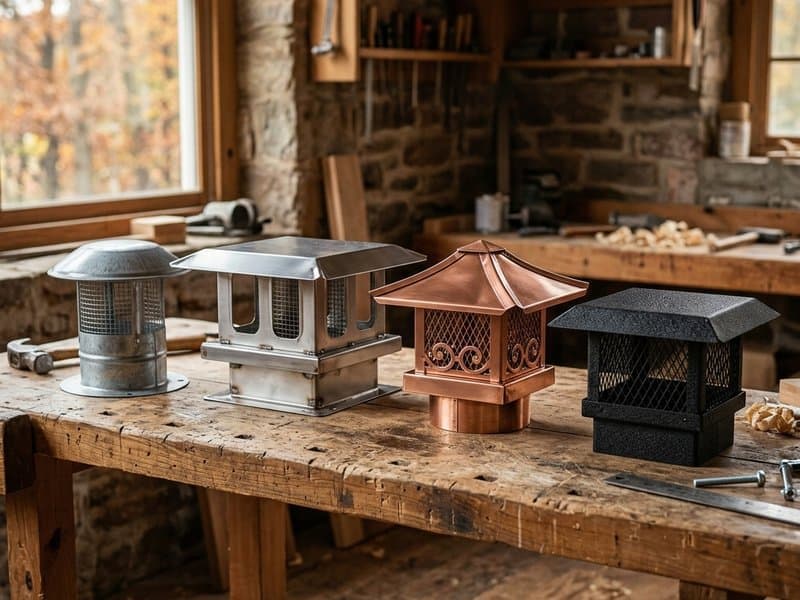
Chimney cap types, costs $150-$1,200, stainless vs galvanized warranty truths, three-measurement sizing, OSHA 4/12 access rules, and the cap install upsells to avoid. Expert-reviewed.
The 7 chimney sweep scam patterns — bait-and-switch deep clean upsell vs legitimate chemical treatment, fake Level 2, multi-alias SEO, unnecessary relining.
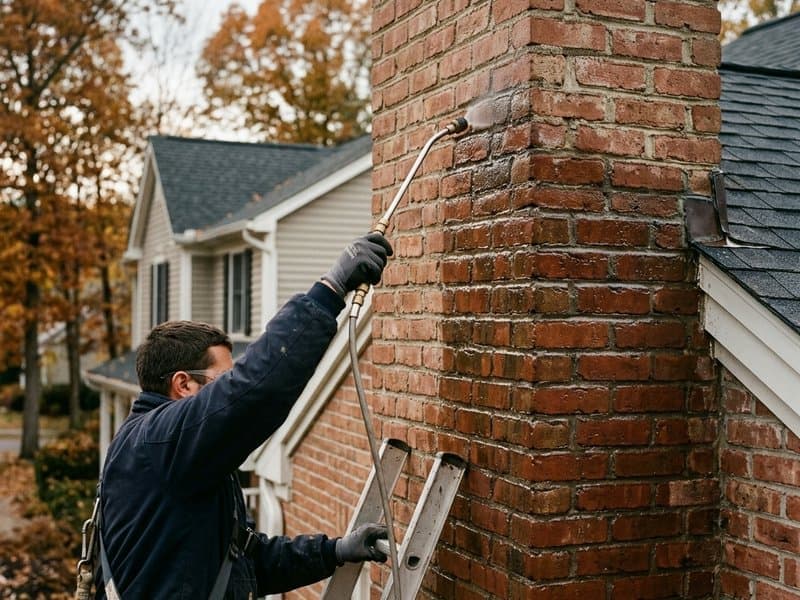
Chimney waterproofing cost, when it's worth it, the vapor-permeable vs sealer distinction, and why Thompson's Water Seal damages brick chimneys.