
Cost Estimator
See what verified chimney sweeps charge in your area for each service.
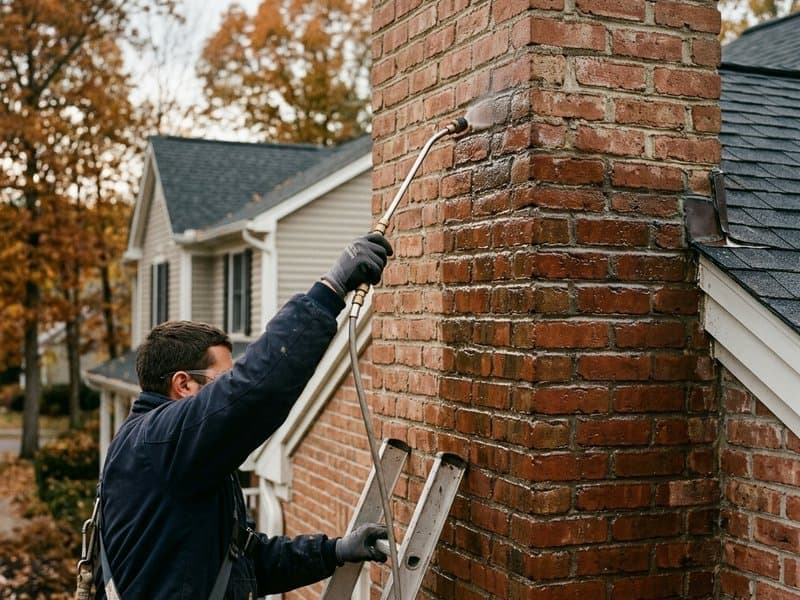
Chimney waterproofing is the application of a vapor-permeable water repellent to the exterior brick and masonry of a chimney to prevent water penetration while allowing moisture trapped inside the masonry to escape. Done correctly, it extends chimney life, prevents interior damage from water intrusion, and costs $200-$600 professionally. Done incorrectly — with the wrong product — it traps moisture inside the brick, accelerates freeze-thaw damage, and can cause more problems than it solves.
The distinction between waterproofing and sealing is the single most important concept in this article. Most of the expensive mistakes homeowners make with chimney water protection come from applying the wrong product or being sold waterproofing on a chimney that doesn't need it. This guide covers when waterproofing is genuinely worthwhile, when it isn't, the products that work, the products that damage masonry, cost breakdowns, and the DIY-versus-professional decision.
Brick and mortar are porous. Water is absorbed into the surface of the masonry during rain, driven deeper during wind-driven events, and slowly evaporates during dry periods. In climates with freeze-thaw cycles, absorbed water freezes and expands inside the brick — the expansion exceeds the brick's tensile strength — and the brick face spalls off. Over years, this cycle destroys exposed masonry.
Chimney waterproofing applies a water repellent that coats the pore structure of the masonry surface without blocking vapor transmission. Water droplets bead on the exterior and roll off. But moisture that has already entered the masonry through unsealed areas can still escape as vapor. The masonry stays dry without becoming a sealed tomb that traps what's already inside.
The practical effects over 5-10 years:
Chimneys in mild climates with low rainfall and no freeze-thaw exposure may not show significant damage even without waterproofing. Chimneys in cold wet climates with 40+ freeze-thaw cycles per year will show visible degradation within 5-10 years if unsealed.
This is the expensive mistake.
Waterproofing means applying a vapor-permeable water repellent. Siloxane- and silane-based chemistry — ChimneySaver, Prosoco, Defy, Chimney Rx, and similar products — penetrates the pore structure of the masonry and creates a water-repellent surface without blocking vapor passage. Water can't get in. Moisture already inside can get out as vapor. This is the correct approach for a brick chimney.
Sealing means applying a non-permeable coating that blocks both liquid water and vapor. Paint, standard acrylic masonry sealer, urethane coatings, and — most commonly misused — Thompson's Water Seal applied to brick chimneys fall in this category. A sealed chimney traps moisture inside the masonry. During freeze-thaw cycles, the trapped water expands and causes worse spalling than an unsealed chimney would experience. The sealer peels, the brick face fails underneath, and the chimney ends up damaged by the product that was supposed to protect it.
The confusion is understandable. The terms "waterproofing" and "sealing" are used interchangeably in everyday language. Hardware stores stock both categories on the same shelf. Thompson's Water Seal is sold specifically marketed as "masonry waterproofing" even though its chemistry is non-permeable and inappropriate for chimneys.
The test: if a product claims to also protect against graffiti, form a visible surface film, or provide "paint-like" coverage, it is a sealer, not a vapor-permeable waterproofer. Do not apply it to your chimney.
| Characteristic | Vapor-Permeable Waterproofing | Standard Masonry Sealer |
|---|---|---|
| Chemistry | Siloxane / silane | Acrylic / urethane / wax |
| Vapor transmission | Allows moisture to escape | Blocks moisture transmission |
| Surface appearance | Invisible (penetrates into pores) | Visible film / wet look |
| Typical products | ChimneySaver, Prosoco Saltguard, Defy | Thompson's Water Seal, Drylok, standard concrete sealer |
| Suitable for brick chimney | Yes | No |
| Freeze-thaw performance | Protects against damage | Accelerates damage |
| Typical lifespan | 5-10 years before reapplication | 1-3 years before peeling/failure |
| Reversible if applied incorrectly | Relatively easy to treat or reapply | Very difficult — requires blasting or chemical stripping |
When a chimney professional says "we apply ChimneySaver" or "we use a Prosoco siloxane product," you are being quoted correctly. When a general handyman says "we can waterproof with Thompson's," the service being offered is not what you actually need.
Waterproofing is not an emergency. It is preventive maintenance that pays off over years, not days. Four scenarios where it makes sense:
New construction, after mortar has cured. Fresh mortar needs approximately 30 days of curing before waterproofing can be applied. New construction is the ideal moment because the masonry is sound, the pores are clean, and no existing damage needs to be addressed first.
After tuckpointing or masonry repair. When a chimney has been tuckpointed (mortar joints replaced) or had brick replacement work, the new mortar is porous and at high risk of water intrusion until the waterproofing is applied. Most professional masons recommend waterproofing as a follow-up step after major repair work.
Preventive maintenance at 5-10 year intervals. A sound chimney with no visible damage benefits from periodic waterproofing application to maintain protection. Set a 5-10 year cycle timed with other chimney service visits.
Chimneys showing early efflorescence. White crystalline deposits on the chimney exterior indicate water is moving through the masonry. If no visible damage has occurred yet, waterproofing can slow or stop the progression. Note: waterproofing treats the symptom; you also need to identify and fix the moisture source (often a cap failure, flashing leak, or crown crack).
Four scenarios where waterproofing is a mistake or premature:
Over damaged brick or crumbling mortar. Waterproofing seals the current condition. If the mortar joints are already failing or bricks are already spalling, waterproofing over the damage is paint-over-rust logic. Fix the damage first, waterproof second.
Over painted brick. Paint must be removed before waterproofing can be applied. Applying a vapor-permeable product over paint either doesn't adhere or does nothing because the paint itself is blocking vapor. Removing paint from brick is an expensive process ($5-$15 per square foot professionally).
In cold weather. Siloxane waterproofing fails to cure properly below 40°F. The application needs at least 24 hours of temperatures above 40°F for proper penetration and bonding. Schedule waterproofing between late spring and early fall in most climates.
On a chimney that shows no water damage and no history of issues. Not every chimney needs waterproofing. A chimney in a dry climate with no freeze-thaw, no visible staining, no efflorescence, no spalling, and no deterioration is not urgently in need of waterproofing. It may be a reasonable preventive measure, but it is not an emergency that justifies high-pressure pricing. Operators who push waterproofing on a visibly sound chimney are padding revenue.
Professional chimney waterproofing costs $200-$600 in most metros. The range depends on chimney size, accessibility (single-story accessible chimney vs two-story with steep roof), surface condition (clean application vs requiring cleaning first), and regional labor rates.
Material cost alone is modest. A gallon of ChimneySaver or equivalent siloxane waterproofing runs roughly $50-$80 retail and covers 100-150 square feet of brick surface. A typical residential chimney requires one to two gallons for two-coat application. Total material cost for DIY is $50-$150.
The gap between material cost ($50-$150) and professional cost ($200-$600) is almost entirely labor, specifically the labor of working safely at height. A single-story accessible chimney can be waterproofed from a step ladder in under an hour. A two-story chimney on a steep roof requires fall-protection equipment, scaffolding or roof brackets, and a trained operator — that's where the cost lives.
If a waterproofing quote comes in well above the typical $200–$600 range for a standard residential chimney, ask what is included. Common additions to the base price: cleaning the chimney exterior before application ($100–$200 additional), repairing minor mortar joints ($200–$500 additional), crown sealing included ($150–$400 additional). A quote in the $800–$1,200 range that bundles these is reasonable. If the quote is just for waterproofing alone, ask the operator to itemize what's driving the price and get a second quote to compare scope.
Professional waterproofing application follows a consistent four-step process. A homeowner evaluating whether the service was performed correctly should watch for each step.
Clean the chimney exterior. Remove dirt, soot, bird droppings, moss, efflorescence, and any loose debris. Heavy staining may require pressure washing or a mild acid cleaning. The waterproofer bonds to the masonry surface — contaminants block adhesion.
Allow the chimney to dry completely. Waterproofing applied to wet masonry does not penetrate correctly. At least 24-48 hours of dry weather before application is standard.
Apply two coats using a garden sprayer or low-pressure roller. First coat wet-on-wet with second coat — applied within minutes of the first while the surface is still damp from the initial application. The product penetrates into the pore structure during this wet-on-wet process. Single-coat application does not provide full protection.
Allow 24-48 hours of curing before rain exposure. Full water-repellent performance develops over the curing period. Rain in the first 24 hours can wash product off before it has bonded.
If a technician completes the job in 30 minutes with a single spray pass and no cleaning prep, the application was incomplete and the product likely will not perform for the expected 5-10 years.
Chimney waterproofing is one of the few chimney tasks that can legitimately be DIY for the right homeowner on the right chimney.
DIY is reasonable when: the chimney is single-story and accessible from a standard ladder, you are comfortable working at moderate height with fall protection, you can allocate a full day for proper cleaning and two-coat application, and you are willing to purchase the correct vapor-permeable product from a masonry supplier (not a standard hardware store sealer).
Professional is the right call when: the chimney is two-story or taller, roof pitch exceeds 6/12, you are not experienced with roof work, the chimney has pre-existing damage that needs repair first, or the chimney requires cleaning or mortar work as prep.
For DIY: purchase ChimneySaver, Prosoco Saltguard WB, Defy Masonry Waterproofer, or Chimney Rx from a masonry supply store or chimney-specific retailer. Not Thompson's Water Seal. Not standard hardware store "masonry sealer." The chemistry difference is the entire point.
Application equipment: a pump-up garden sprayer works well. A low-pressure roller works. A brush works but is tedious. Do not use a high-pressure paint sprayer — you want even saturation, not atomization.
Estimated DIY cost for a single-story residential chimney: $50-$150 in materials, 4-6 hours of your time, equipment you likely already own.
A quality vapor-permeable waterproofing application, properly applied to clean masonry, performs for 5-10 years before reapplication is needed. Performance degrades gradually rather than suddenly — the chimney does not "fail" at year 10 but gradually loses water repellency starting around year 5-7.
Factors that shorten the lifespan:
Factors that extend the lifespan:
Most homeowners schedule waterproofing every 7-8 years as a rule of thumb, often timed with other chimney maintenance visits to avoid separate trip fees.
Waterproofing is one of several services that chimney operators sometimes oversell to pad invoices. The pattern: homeowner calls for annual sweep, technician inspects, technician identifies "waterproofing as urgent preventive maintenance," and $400-$800 is added to the invoice.
The questions to ask before authorising waterproofing on an unplanned visit:
"What specific damage indicates the chimney needs this now?" Legitimate answers reference efflorescence, spalling, mortar joint failure, or documented water intrusion. Vague answers about "preventive protection" on a chimney with no visible issues are revenue padding.
"When was the chimney last waterproofed?" If the answer is "probably never" and the chimney is 30 years old with no visible damage, the masonry is doing fine without waterproofing and the intervention is optional. Scheduling for the next trip is fine.
"What product do you use and is it vapor-permeable?" A legitimate operator names the product (ChimneySaver, Prosoco, Defy) and confirms vapor-permeable chemistry. An operator who answers vaguely or mentions Thompson's Water Seal is either uninformed or going to apply the wrong product.
"Can this wait until my next scheduled service?" Most waterproofing needs are not urgent. Operators who pressure same-day waterproofing work are using urgency tactics that don't match the preventive nature of the service.
Browse 30+ guides, or jump straight to verified operators in your state.
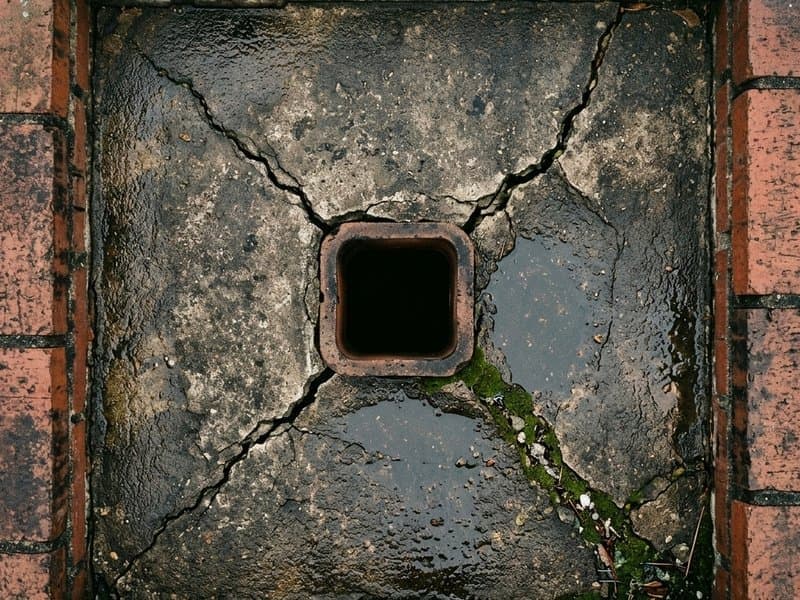
Chimney crown repair cost $150-$2,000. Crown vs cap vs chase cover, severity-based repair options, and the $2,000 rebuild upsell for $200 hairline cracks.
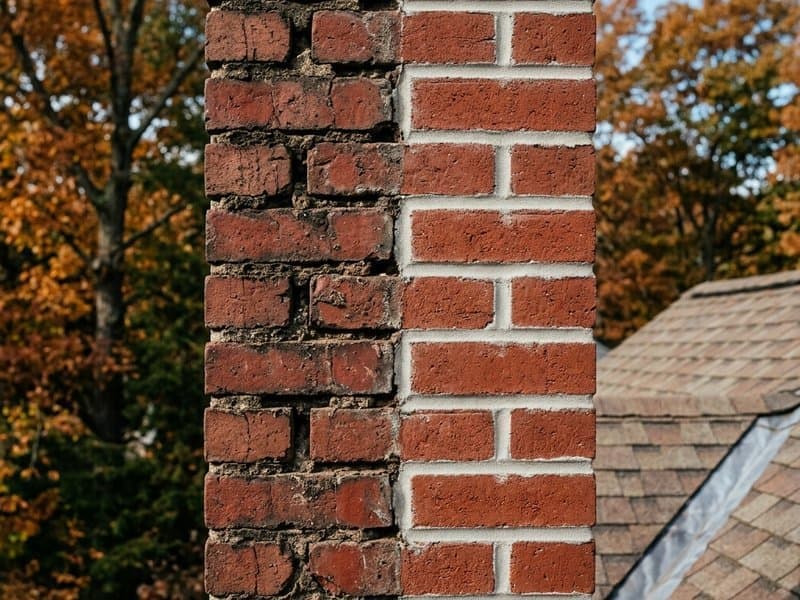
Tuckpointing chimney guide: what it is, realistic cost ranges, how to spot bad mortar matching on old brick, and the process step by step.
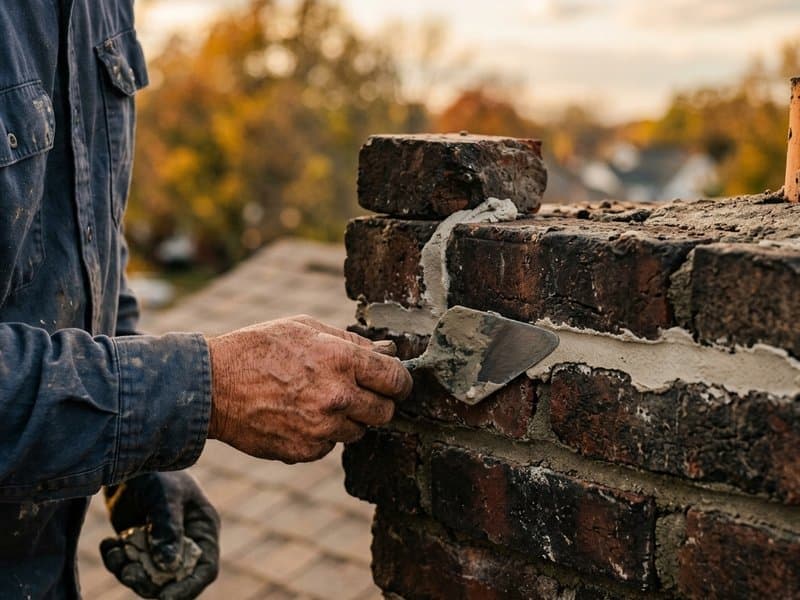
Masonry chimney repair scope, cost, and process — tuckpointing, spalling, cracks, efflorescence. When to hire a mason vs a chimney sweep.