Creosote Risk Calculator
Estimate creosote buildup (Grade 1/2/3) based on fuel, usage, and time.
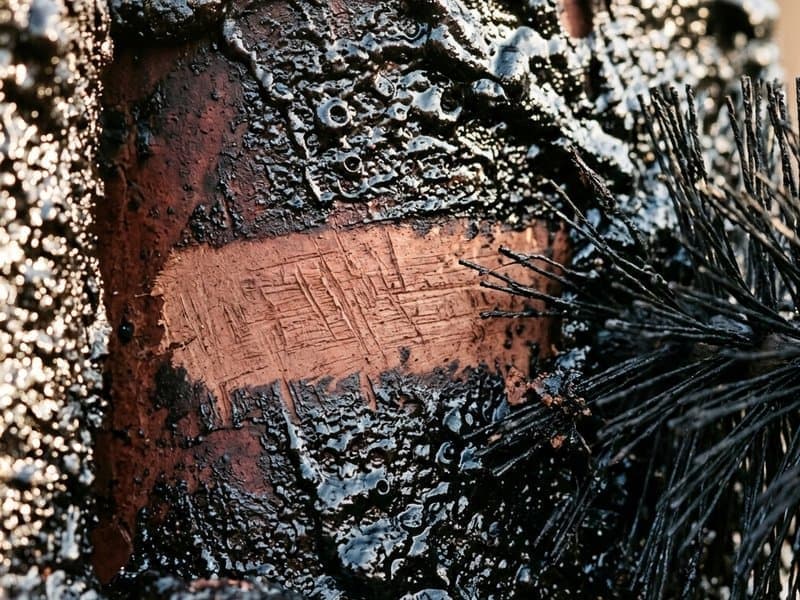
Creosote is the condensed residue of incomplete wood combustion — a tar-like substance that coats the interior of chimney flues and is the direct cause of nearly every residential chimney fire in the United States. Professional chimney sweeps classify creosote into four distinct forms: 1st stage (dry powder), 2nd stage (crystalline), 3rd stage (glazed), and expanded creosote — a separate post-ignition form that is the single most important physical evidence of a chimney fire. Per US Fire Administration data, approximately 22,000 residential chimney fires occur annually in the US, the overwhelming majority traceable to creosote ignition.
This guide is the consumer reference for creosote. It covers what creosote is, the three accumulation stages plus expanded creosote, the specific fire risk of each, what causes excessive accumulation, how to remove creosote at each stage, and the real cost ranges. The single most important sequencing rule: video inspection should always precede sweeping. Sweeping easily destroys expanded creosote — the irreplaceable evidence of a past chimney fire — and once that evidence is gone, insurance documentation becomes very difficult.
Creosote is a byproduct of wood combustion that forms when incompletely-burned hydrocarbons condense on cooler flue surfaces as they move up the chimney. Wood that does not fully combust releases volatile compounds — tars, oils, and hydrocarbons — as smoke. When these compounds contact flue surfaces that are below their condensation temperature, they deposit as a coating that hardens into creosote.
The condensation happens at the flue surface, not in the fire itself. This is why creosote accumulates thickest at the top of the chimney (where flue gases have cooled most) and why exterior-wall chimneys accumulate creosote faster than interior-wall chimneys (exterior walls run cooler). It is also why oversized flues — big masonry chimneys serving small modern wood stoves — accumulate creosote faster than properly-sized flues: the cooler walls condense more vapor.
Creosote is highly flammable. Once ignited, it burns at temperatures of 1,500-2,000°F inside the flue — hot enough to crack clay tile liners, damage stainless steel, and transfer enough heat to the surrounding masonry and framing to ignite structural members. This is the mechanism of chimney fires. Prevention is the first defense; annual removal is the second.
Professional chimney sweeps classify creosote into three accumulation stages — 1st, 2nd, and 3rd — plus a separate post-ignition form called expanded creosote. Understanding which form your flue has determines the appropriate response, and (in the case of expanded creosote) determines whether sweeping is even safe to do before documenting the chimney's history.
The earliest stage. A dry black powder — what most people know as soot. Removable with standard brushes during a routine annual sweep. This is the least dangerous form of creosote and is the normal output of any wood-burning system that's being maintained on schedule.
If your chimney is being swept annually and you burn reasonably well, 1st stage is all you will ever accumulate.
Forms after repeated heating and cooling cycles. The structure is crystalline — it looks like black sea salt rather than dusty soot. Standard brushes may not fully remove it. Rotary sweeping is the most effective method for 2nd stage deposits.
2nd stage indicates that accumulation has been allowed to progress beyond normal annual maintenance, that burning practices are generating more creosote than a single year should produce, or both. See the "what causes excessive creosote" section below.
Forms after long or intense heating where 2nd stage crystals melt. Initially gummy, it dehydrates over time to a hard glaze bonded to the flue surface. Even rotary sweeping may not remove it. Chemical treatment is required.
A note on rotary chains: historically, rotary chain whips were used to break up 3rd stage glaze. They are no longer recommended because they pose a high risk of damaging the flue lining. Per NFPA 211 Section 14.6: "Cleaning of chimneys, if necessary, shall be done by methods that do not impair structural or thermal performance." A method that destroys the liner to remove the deposits is not compliant with the standard.
This is the most important creosote category for any homeowner whose chimney has ever produced a loud roar, an unusual flame at the cap, or any other suspected ignition event. Expanded creosote is a distinct post-ignition form that occurs only upon ignition (chimney fire).
If you suspect a chimney fire has occurred — even a small one that self-extinguished — request a video inspection before any sweeping. A legitimate operator will agree without resistance. An operator who insists on sweeping first is either unaware of expanded creosote or willing to destroy evidence the homeowner may need.
| Form | Appearance | Removal | Fire Risk | Cost |
|---|---|---|---|---|
| 1st stage | Dry black powder (soot) | Standard brush | Low under 1/8 inch | $150-$300 (standard sweep) |
| 2nd stage | Crystalline, like black sea salt | Rotary sweeping most effective | Moderate | $200-$400 |
| 3rd stage (glazed) | Hard shiny black glaze, bonded | Chemical treatment (Poultice Creosote Remover) | Very high | $900–$2,000 |
| Expanded creosote | Pumice-like or flaky like pastry | Do not sweep — document first | Indicates a fire already occurred | Video inspection $250-$500 |
NFPA 211 Section 14.6 governs cleaning methods: "Cleaning of chimneys, if necessary, shall be done by methods that do not impair structural or thermal performance." Three legitimate methods exist, each matched to specific creosote forms.
Valid for flues with only 1st stage creosote. The operator uses traditional chimney brushes — effective for soot removal in regularly-maintained flues. This is the most common method on annual maintenance visits.
A more aggressive method using powered rotating tools. Valid for all systems but most useful for 2nd stage (crystalline) deposits and heavy or crusty creosote that exceeds what a static brush can dislodge. Rotary sweeping is the appropriate response when a video inspection reveals 2nd stage accumulation.
A professionally-applied chemical product that dissolves and absorbs 3rd stage glazed creosote. Two products are currently available to professionals. Application methods differ between smoke chambers and flues — they are not the same surface and the chemistry is applied differently.
This is a labor-intensive process that includes slake time — the period during which the material hydrates and chemically reacts with the glaze. Workers may appear idle during slake time, but they are waiting on a necessary chemical process. The labor that bookends slake time (preparation, application, post-slake removal, post-treatment camera verification) is what justifies the cost.
Legitimate pricing for chemical creosote treatment: $900–$2,000, based on analyzed time and materials. This is a separate scheduled appointment, never an on-the-spot upsell during a routine sweep.
Bottom-up sweeping is preferred over top-down for dust control. The operator sweeps from inside the home, constantly monitors airflow, and can modulate brush speed to limit dust migration into the living space.
Top-down sweeping carries inherent risk of dust migration and would require two people — one on the roof and one monitoring below — with an implicit delay between communication and action. Speed modulation from the top cannot be done efficiently. For these reasons, bottom-up is the standard professional approach for residential systems.
Note on rooftop access: rooftop access is actually not within the scope of a Level 1 inspection, since it may require OSHA-compliant fall protection. A Level 1 inspection of readily accessible portions does not, on its own, mandate the inspector get on the roof. A camera at the cap from the firebox side, or photographs from the ground or a window, can document much of what's needed without OSHA-triggering exposure.
Creosote accumulates in every wood-burning flue. Excessive accumulation — enough to produce 2nd stage or 3rd stage within a single burning season — has five specific causes. Reducing creosote means addressing these.
This is the dominant cause of excessive creosote. Wood with moisture content above 20% contains water that must evaporate before combustion can occur. The evaporation cools flue gases, increases smoke production, and dramatically increases creosote deposition. Burning wood at 30% moisture produces 3-5x more creosote than wood at 15% moisture for the same heat output.
Seasoned wood has been split for at least 6-12 months (longer for dense hardwoods like oak), stored covered on top with the sides open to air, and ideally measured with a moisture meter reading under 20%. Wood with cracked ends, a hollow sound when struck against another piece, and a gray weathered appearance is typically seasoned. Fresh-cut wood, wood with green bark, and wood that smells strongly of sap is not.
Closing the damper too far, closing stove air intakes for overnight burns, or running airtight stove doors without adequate air produces smoldering fires. Smoldering fires have incomplete combustion — the fire produces more volatile compounds and less clean burn. These volatiles then condense on the flue walls as creosote.
The counter-intuitive lesson: a hot active fire with plenty of air produces less creosote than a cool smoldering fire, even though the hot fire burns more wood in the same time. For wood stoves, run the stove at appropriate temperature (250-475°F flue temperature) during active burning. Overnight low-and-slow burns are a creosote generation mode.
A flue that runs cool condenses more vapor as creosote. Three factors produce cool flues: exterior-wall chimneys (masonry against outside air), uninsulated stainless liners (no insulation between liner and outside air), and oversized flues (large diameter for the appliance output, so gases cool faster as they move up).
Insulation around a stainless liner keeps flue gases hotter through the run, reducing creosote deposition. Proper flue sizing — matching the liner diameter to the appliance specification — reduces condensation. Exterior-wall chimneys cannot be easily relocated, but insulated liners partially compensate.
This overlaps with Cause 2 but deserves separate mention because it is primarily a behavior issue rather than a hardware issue. Operators who leave a fire to smolder unattended, or who pack the stove full and close the air down at bedtime, are running in a creosote-generating mode. Active fires with visible flames produce less creosote than coal-bed smoldering.
Unusually short chimneys (under 10 feet of flue run) or flue designs with significant horizontal runs or offsets produce draft problems that promote creosote accumulation. Fixing this usually requires chimney extension or redesign, which is outside routine maintenance. If you burn wood and your chimney is short or has complex geometry, budget for more frequent sweeping.
The five practices that prevent excessive creosote accumulation. Implementing these reduces creosote generation by 70-90% compared to the worst-case operation.
Split your wood 6-12 months before burning (longer for oak and other dense hardwoods). Store under a roof with open sides for air circulation. Purchase a moisture meter ($20-$30) and spot-check wood before burning — readings above 20% mean the wood needs more drying time. Seasoned wood alone addresses 50-70% of excessive-creosote problems.
Run stove flue temperatures in the 250-475°F active burning range (a magnetic flue thermometer is the standard tool, $15-$30). Avoid closing the air supply so far that flames disappear — visible flames are the indicator of adequate air. If you want long burn times, choose denser hardwoods rather than restricting air.
Open the damper fully during active burning. Leave stove air intakes open enough to maintain visible flame. Do not pack the stove so full that air cannot circulate around the wood. A well-ventilated fire is both cleaner-burning and more efficient per pound of wood.
Insulate stainless liners when retrofitting wood stoves. Consider exterior-chimney insulation retrofits if your chimney is on an outside wall in a cold climate. Warm flues condense less vapor, producing less creosote per pound of wood burned.
The single most reliable creosote-management practice is the inspect-then-sweep sequence on an annual cadence. The video inspection documents 1st/2nd/3rd stage and rules out expanded creosote (which would change everything about the visit). The sweep then matches the documented condition. Annual cost ($150-$300 for 1st stage; $200-$400 for 2nd stage rotary; $900-$2,000 for 3rd stage chemical treatment when documented) is a small fraction of the cost of an undetected chimney fire. See how-often-chimney-sweep for the full discussion of sweep frequency.
The removal method should match the form. A standard brush on 3rd stage glazed creosote is ineffective; chemical treatment on 1st stage powder is unnecessary scope expansion. The matrix below maps each form to its appropriate response.
Standard chimney brushes worked through the flue. The mechanical action dislodges the dry powder, which falls to the smoke shelf and is vacuumed out. This is the service included in any annual sweep.
Rotary tools rotate aggressive heads through the flue at controlled speed, breaking up the crystalline structure that standard brushes cannot dislodge. This is the appropriate response when a video inspection reveals 2nd stage deposits.
Glazed creosote requires professional chemical treatment using Poultice Creosote Remover. Two products are currently available to professionals. The chemical is applied to the glaze, allowed to slake (hydrate and react), and the dissolved deposits are removed. Application methods differ between smoke chambers and flues. Multiple applications are sometimes required for very thick glaze.
In worst cases where the glaze cannot be fully removed — too thick, too old, or the underlying liner is damaged — liner replacement is the final remediation option at $1,500-$5,000.
If video inspection reveals expanded creosote (pumice-like or flaky-pastry texture), do not sweep. Photograph the deposits in place. Collect a physical sample. Schedule any follow-up work as a separate appointment after the documentation is preserved. This is the only category of creosote where the right immediate response is to leave it alone and document.
Creosote removal logs — CSL, Rutland, and similar products sold at hardware stores — are a partial solution, not a replacement for professional sweeping. Understanding what they actually do helps you use them correctly.
The logs contain chemical catalysts that, when burned, produce vapors that partially break down 2nd stage hardened creosote, converting it to something closer to 1st stage flaky creosote. The treated creosote is easier to brush away during the next sweep.
They do not remove creosote on their own. The chemical action only converts the creosote to a form that brushing can remove — the brushing still has to happen. Marketing that implies the log "cleans the chimney" is overstated. The log is a pretreatment, not a treatment.
They do not work on 3rd stage glazed creosote. The chemistry is not aggressive enough to break down heavy glaze. Using logs as a response to 3rd stage is a delay that usually makes the eventual remediation more expensive.
They do not substitute for professional inspection. A log treatment tells you nothing about crown condition, liner integrity, cap condition, or flashing — all of which a professional sweep observes during the visit.
Regular light use — one or two logs per burning season as a maintenance tool between professional sweeps — has modest benefit. The logs reduce 1st stage-to-2nd stage progression slightly and make the eventual sweep easier. For homeowners who burn wood frequently in marginal conditions (cool climate, exterior-wall chimney, occasional unseasoned wood), the logs are a cheap addition to a serious maintenance program.
They do not replace the annual sweep. If you are using creosote logs instead of having your chimney swept, you are delaying a more expensive future problem.
A 10-minute self-inspection gives you a useful baseline before meeting with any operator.
Flashlight, small mirror, old clothes, dust mask. Optional: a screwdriver or similar tool for scraping a sample.
Document what you observe with photos. This gives you independent evidence to compare against any operator's findings.
Understanding the mechanism of a chimney fire helps make the case for prevention. A 3rd stage chimney fire is not a distant theoretical risk — it is the failure mode that causes the 22,000 annual US residential chimney fires.
A stray spark, an over-hot fire, or a piece of burning wood disturbed into contact with the flue wall can ignite accumulated creosote. Once any section ignites, the fire spreads rapidly along the creosote-coated interior. Flame temperatures inside the flue rapidly exceed 1,500°F and can reach 2,000°F within minutes.
A loud roaring sound like a freight train. Visible flames or sparks at the chimney top. The chimney mass itself heats audibly and may vibrate. Smoke density at the cap increases dramatically. Residents often describe the sound as one of the most frightening they have experienced.
Clay tile liners crack from the thermal shock (the temperature differential across the tile thickness during a rapid heat spike is extreme). Stainless steel liners below 316Ti grade can warp. The surrounding masonry absorbs heat and transfers it to adjacent framing members. In the most severe cases, framing ignites and the fire spreads from the chimney to the building.
If you experience a chimney fire, call 911 immediately. Leave the house. Do not attempt to extinguish from the firebox side — the fire is in the flue, not the firebox. Fire departments have specialised techniques for chimney fires that homeowners do not.
After any chimney fire, a Level 2 inspection is required under NFPA 211 before the chimney can be used again. The inspection assesses whether the liner survived, whether the masonry is intact, and whether relining or repair is required. See inspection-levels for Level 2 scope details.
The best chimney fire response is prevention: annual sweeping and appropriate burning practices that keep creosote from accumulating to dangerous levels in the first place.
Technical review by John Zeron, Master Chimney Sweep, Master Hearth Professional — Closer to the Hearth Chimney Specialists
Browse 30+ guides, or jump straight to verified operators in your state.

How often should you clean your chimney? The direct answer from NFPA 211, broken down by fuel type and usage — plus when annual sweeps are a scam.
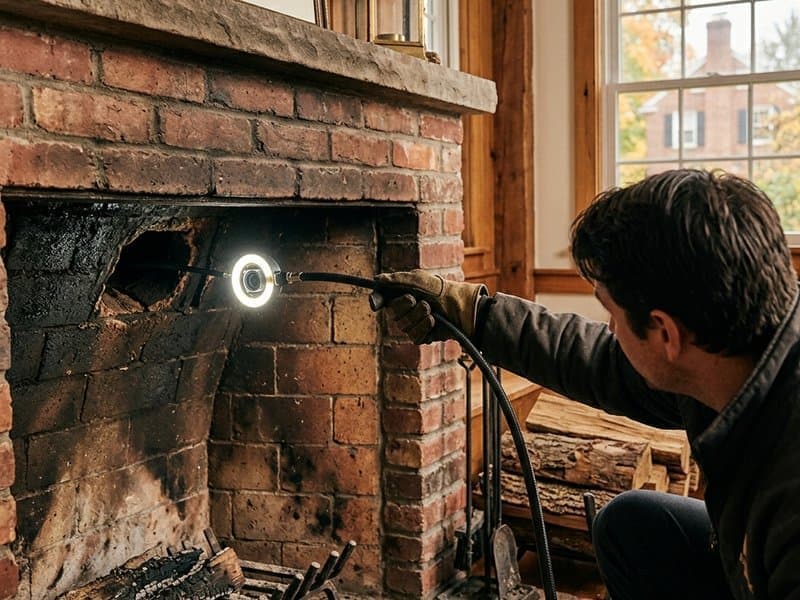
NFPA 211 inspection levels: Level 1 no camera, Level 2 video camera required. Each level includes all lower levels. Sweep durations, scope, scams to avoid.
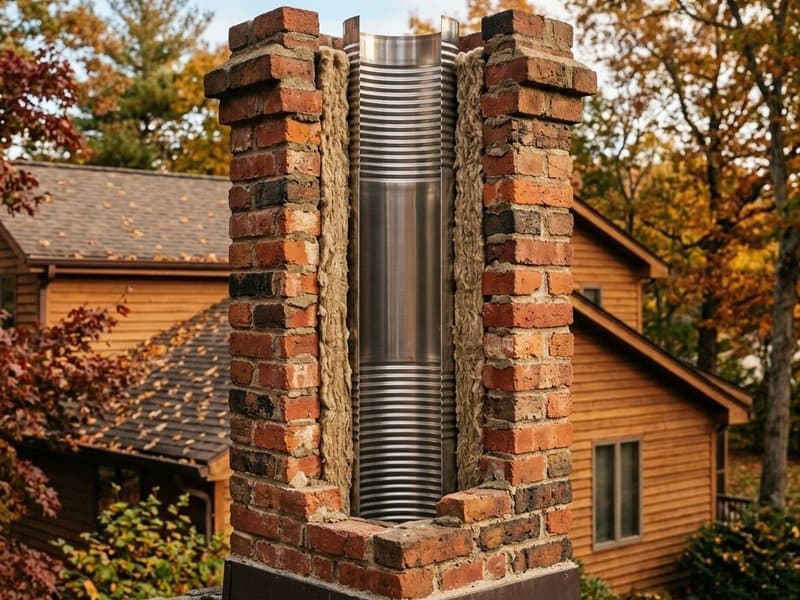
Chimney liner materials compared — clay, stainless 304 vs 316Ti, cast-in-place, aluminum. Costs from $10/ft to $7,000 installed. The full technical reference.