Is My Quote a Scam?
Instant sanity check on any quote against verified pricing for your zip.
It started with a complaint.
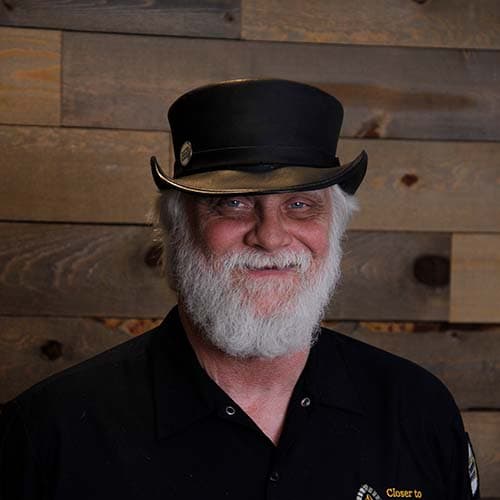
In April 2026, John Zeron — owner of Closer to the Hearth Chimney Specialists in Newark, Delaware — received one of our outreach emails letting him know his business was listed on FindChimneySweepers. He visited the site, browsed the resource library, and found a sentence in our inspection levels guide that called any Level 2 inspection quoted above $600 "inflated."
He wrote back the same day. His point was simple and fair: you can't judge a professional's pricing without knowing what goes into it. His rates are built on sound accounting and three decades of field work. Calling them inflated without context wasn't just wrong — it discouraged homeowners from hiring the most qualified people in the industry.
He was right. We fixed it within hours.
Most people would have stopped there. John kept reading.
Over the following days, he sent detailed corrections on everything from Delaware licensing requirements to OSHA fall protection thresholds to the chemistry of creosote removal. Not because we asked — because this is what he does. He teaches. His website says his mission is "to save lives and, through information, provide our clients with the warmth of the hearth." Every email he sent us lived up to that.
John holds the CSIA Master Chimney Sweep designation — the highest credential the Chimney Safety Institute of America offers, requiring over a decade of continuous certification and advanced testing. He is also an NFI Master Hearth Professional, meaning he has passed certification exams in all three fuel types: wood, gas, and pellet. He carries additional credentials from the NCSG as a Certified Master Chimney Technician and is an NFPA member.
He runs Closer to the Hearth with his son Andrzej "AJ" Zeron, who serves as vice president and holds both CSIA and NFI certifications of his own. Together, they serve New Castle and Kent Counties in Delaware and Chester County in Pennsylvania.
They are BBB accredited, carry a 5.0 rating on Angi, and donate one percent of every job to Sweep Away Cancer — a charity started by a chimney sweep to help families with the financial weight of cancer treatment.
In an industry where anyone can call themselves a chimney sweep with no license required in 49 out of 51 states, credentials like John's are rare. Having someone with his depth of knowledge review the pages he's chosen to read means the homeowners who land on those guides are getting information that has been checked by one of the most qualified people in the trade.
John's contributions touch some of the most-read pages on this site.
He identified that the Delaware Superior Court has ruled full NFPA 211 compliance as the minimum standard of care for chimney sweeps — meaning a Level 1 Inspection in Delaware isn't an upsell, it's the legal baseline. He provided county-level licensing detail that isn't easily found in any public database: New Castle County requires a separate "Decorative Appliance" license to install hearth appliances, while Kent and Sussex Counties are regulated at the town level.
He corrected our chimney cap guide with the real OSHA fall protection threshold — 4/12 pitch, not the 8/12 we had published — and explained that roof-mounted ladders must be anchored to both the roof structure and the chimney. He added the third measurement professionals use for cap sizing that we had missed entirely. He taught us why individual caps on multi-flue chimneys can pour over 35 gallons of water per year into adjacent flues.
He gave us the four-form creosote classification that practicing sweeps use every day — and explained why expanded creosote, which forms only during a chimney fire, is the single most important evidence for insurance claims. It's easily destroyed by sweeping. That's why his team always runs video before touching a brush — and why our creosote guide now clearly states the same.
He corrected our inspection levels article on points that directly affect every homeowner hiring a sweep: camera is not required for Level 1, video camera is required for Level 2, documentation is the mark of a professional but not a requirement of either level under NFPA 211.
And he drew the distinction that changed our most-read article. We had treated every mention of "deep clean" as a scam. John pointed out that professional chemical creosote treatment — a $900–$2,000 procedure using Poultice Creosote Remover for third stage glazed creosote — is a real, labor-intensive service. The scam is the $49 bait-and-switch. The professional version is scheduled, documented, and necessary. Our deep clean guide now reflects that clearly.
When you read a guide on FindChimneySweepers that carries John's name at the bottom, it means a Master Chimney Sweep with over 30 years of experience has read it, challenged what was wrong, and confirmed what was accurate. That's a level of editorial review most consumer resources in this industry simply don't have.
If you're a homeowner in Delaware, southeastern Pennsylvania, or anywhere in John's service area and you need chimney or hearth work done right — by someone who treats the trade as a calling, not just a job — you'd be hard-pressed to find anyone more qualified.
View John's listing: Closer to the Hearth Chimney Specialists — Newark, Delaware →
Browse 30+ guides, or jump straight to verified operators in your state.
The 7 chimney sweep scam patterns — bait-and-switch deep clean upsell vs legitimate chemical treatment, fake Level 2, multi-alias SEO, unnecessary relining.
The 10 trust signals that separate honest chimney sweeps from scammers. Vetting questions, verification steps, and how to avoid paying 10x market rate.
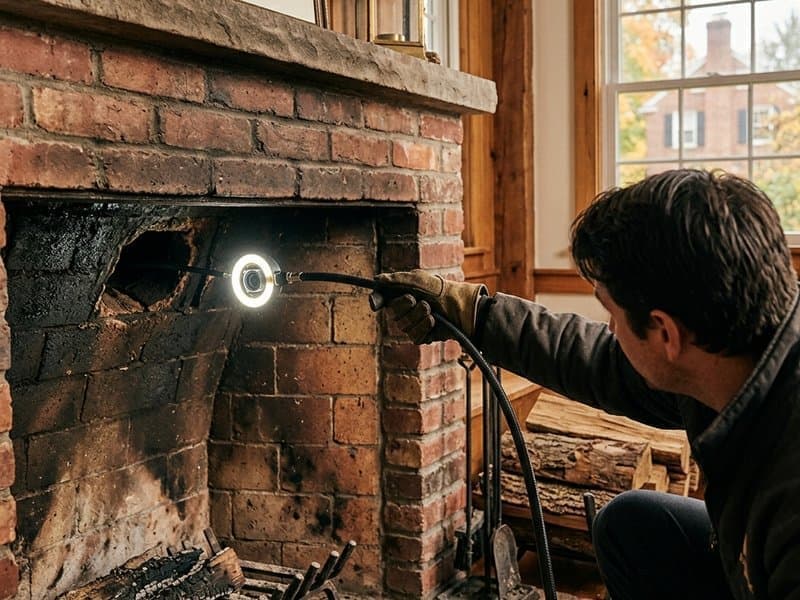
NFPA 211 inspection levels: Level 1 no camera, Level 2 video camera required. Each level includes all lower levels. Sweep durations, scope, scams to avoid.